
Factory-Direct Prehistoric Robotic & Biomimetic Models
Direct factory delivery of heavy-duty robotic engineering, IP-rated weatherproof animatronics, and scientifically validated Mesozoic and Cenozoic reconstructions.
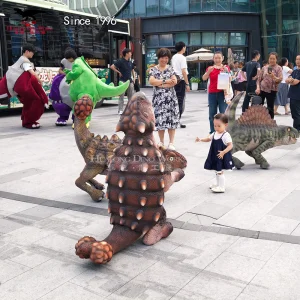
High-Quality Intelligent Walking Dinosaur Baby Four-Legged Dino Robot Dog Walking Animatronic Mascot for Stadium Attraction Manufacturers, Supplier
Procurement Details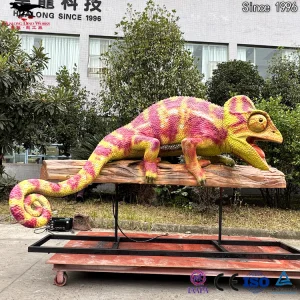
Buy Custom Pitch Theme Park Interactive Sculpture High-Quality Foam Weatherproof & Moisture-Proof Factory Direct Animatronic Animal Model Simulated Giant Chameleon Supplier, Factory
Procurement Details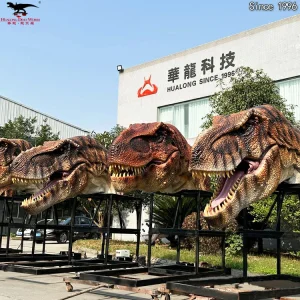
Buy Animatronic Dinosaur Head Display Hualong Technology for Theme Park Museum Interactive Exhibit Supplier, Factories
Procurement Details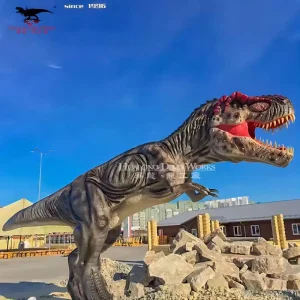
High-Quality Animatronic T-Rex Aggressive Dinosaur in Amusement Park Manufacturers, Factories
Procurement Details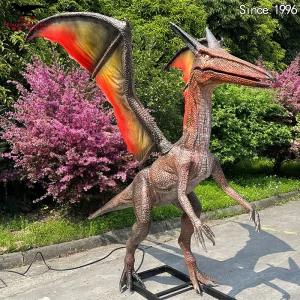
High-Quality Custom Dragon Model High-Quality Foam Weatherproof & Moisture-Proof Western Mythical Winged Lord Theme Park Fantasy Exhibit CE Supplier, Suppliers
Procurement Details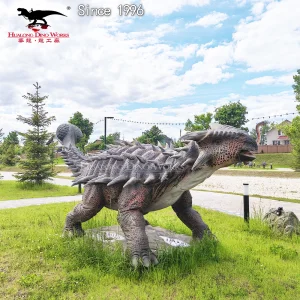
Buy Armored Dinosaur Animatronic Ankylosaurus Model for Theme Park Attraction Manufacturers, Factories
Procurement Details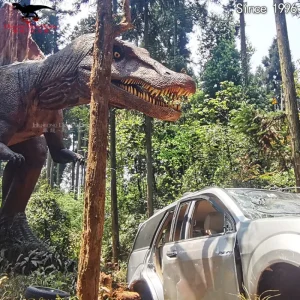
High-Quality 16 Meters Animatronic Spinosaurus Attack A Car In Adventure Park Suppliers, Factory
Procurement Details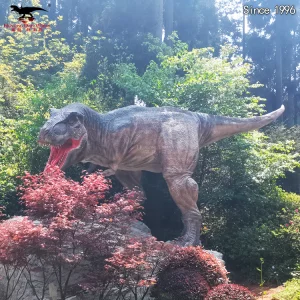
Buy Zigong Sichuan Custom Lifelike Dinosaur Model Outdoor Science Waterproof Simulated Landscape Design(CE Certified) Manufacturer, Factories
Procurement DetailsPrehistoric Animal Animatronics: Global Industrial Status & Economics
The transition from mechanical novelty to durable experiential engineering. How tier-one attractions de-risk capital investment.
The global market for full-scale prehistoric animal models and biomimetic animatronics has expanded rapidly beyond traditional natural history museums into themed entertainment destinations, zoological parks, municipal light festivals, and immersive retail complexes. Driven by rising consumer demand for physical-digital blended reality (phygital experiences), commercial procurement of animatronic dinosaurs and Cenozoic megafauna represents a high-yield capital allocation for venue operators seeking proven footfall drivers.
Historically, early animatronics suffered from brittle hydraulic mechanisms, limited joint elasticity, and inadequate UV resistance, leading to frequent field failure and elevated operating expenditure (OpEx). Today, modern manufacturing operates out of consolidated industrial clusters—principally anchored in Zigong, Sichuan Province, China. This cluster integrates aerospace-grade structural engineering, precision digital brush/brushless servo drives, closed-cell polyether foam musculature, and high-tensile composite silicone epidermis with embedded microfilament matrices.
Engineering Architecture & Fabrication Standards
A breakdown of structural kinematics, biomimetic materials, and environmental survivability protocols.
1. Kinetic Internal Skeleton
Fabricated using national standard Q235 structural carbon steel pipe with CNC laser cutting. Structural members undergo hot-dip galvanization and triple-coat anti-corrosion epoxy priming. Drive systems employ high-torque permanent magnet DC or brushless AC motors paired with harmonic reducers, delivering precision kinematic articulation with zero backlash.
2. Biomimetic Muscle & Foam
Musculature is shaped by hand using flame-retardant (UL94-HF1 compliant) high-resilience polyether sponge foam (density 28–45 kg/m³). Foam blocks are mapped across mechanical linkages using elastomeric damping joints, preventing tension tears during multi-axis neck, belly breathing, and tail-whip movements.
3. Composite Silicone Skin
A multi-stage skin matrix combining room-temperature vulcanizing (RTV-2) silicone, liquid polyurethane elastomers, and embedded bidirectional glass-fiber tensile scrims. This achieves superior tensile elongation (>450%) while preventing tearing under heavy wind load, extreme solar UV radiation, and sub-zero temperatures (-30°C to +50°C).
4. Microcontroller & Sensor IO
Programmable Logic Controllers (PLC) or embedded ARM Cortex microprocessors govern synchronized multi-track audio playback, DMX-512 stage lighting integration, and dynamic movement. Trigger options include Doppler radar microwave sensors, thermal infrared detection, RFID tags, or master-controlled show networks.
Engineered Deployment Scenarios Across Global Markets
Adapting prehistoric mechanical models to specific operational parameters, environmental stressors, and revenue models.
Outdoor Destination Theme Parks
In high-throughput adventure parks, life-size models like the 16-meter Spinosaurus or Tyrannosaurus Rex act as anchor attractions. Systems are engineered with all-weather rain hoods, high-torque industrial gearboxes, and automated grease lubrication lines to support 10 to 14 hours of continuous daily cycles with zero downtime.
Museums & Paleontological Halls
Academic institutions demand osteological and anatomical accuracy. Models are constructed under paleontological oversight, reproducing exact cranial crest proportions, dermal nodule distribution (e.g., Ankylosaurus armor plating), and species-accurate articulation for both full animatronics and fiberglass fossil displays.
Night Tourism & Illumination Festivals
By blending traditional Zigong lantern craftsmanship with kinetic animatronics, illuminated prehistoric exhibits generate substantial secondary ticket revenue after dark. Internal high-efficiency LED arrays and cold-spark effects extend venue dwell times into high-spending evening dining hours.
Retail Atriums & Commercial Plazas
For indoor shopping complexes, sound pressure levels and noise floor management are critical. Models are equipped with ultra-quiet brushless motors, acoustic dampening, and contactless microwave radar triggers that safely engage shoppers while preserving mall acoustic standards.
Touring Exhibitions & Traveling Shows
Show-touring animatronics require modular quick-disconnect frame connectors, specialized flight-casing, and plug-and-play wiring harnesses. This modular architecture allows quick setup, teardown, and container packing by field crews with minimal training.
Eco-Resorts & Natural Scenic Trails
In national forests and botanical reserves, equipment is concealed within natural landscaping. Weatherproof silicone formulas resist mold and fungal attack in humid tropical environments, while control panels operate in insulated, IP66-rated camouflaged ground enclosures.
Industry Trends: The Next Horizon in Prehistoric Biomimetics
AI edge vision, quadruped dynamic locomotion, and low-carbon sustainable production.
AI Computer Vision & Spatial Tracking
Future-ready models are integrating edge-computing micro-cameras within the orbital sockets. Real-time facial identification and skeletal tracking algorithms allow predators to track visitors with their gaze and modulate roaring intensity based on crowd proximity, creating personalized visitor interactions.
Dynamic Quadruped Locomotion
Bridging traditional animatronics with modern robotics, intelligent four-legged platforms (such as robotic mascot walking units) utilize inverse kinematics, brushless hub motors, and gyro-stabilization to untether models from stationary ground plates, turning them into roaming live attractions.
Eco-Polymer & Low-VOC Formulations
With environmental compliance tightening across the EU and North America, production lines are shifting to zero-VOC silicone coatings, bio-derived polyurethane foams, and recycled structural steel frames, significantly lowering the embodied carbon of large-scale attractions.
Predictive Cloud Maintenance (IoT)
Next-generation models feature vibration sensors, motor winding thermistors, and integrated 4G/5G telemetry modules. Real-time telemetry predicts mechanical wear and bearing failure weeks before breakdown occurs, enabling preventive maintenance and maximum uptime.
Large-Scale Animatronic Dinosaurs & Kinetic Exhibits
Explore specialized Jurassic, Cretaceous, and fantasy installations engineered for high-capacity global attractions.
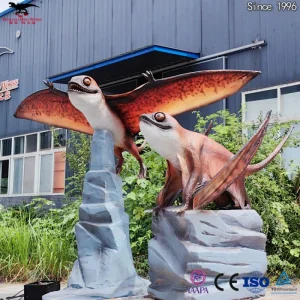
High-Quality Realistic Animatronic Sinomacrops Standing On The Rockery In Jurassic Park Manufacturer, Suppliers
Procurement Details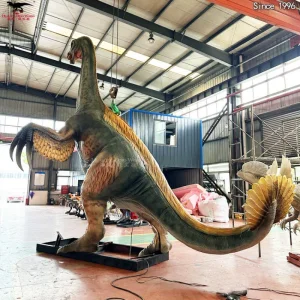
Buy Animatronic Robotic Therizinosauria For Dinosaur Theme Park On Sale Suppliers, Factories
Procurement Details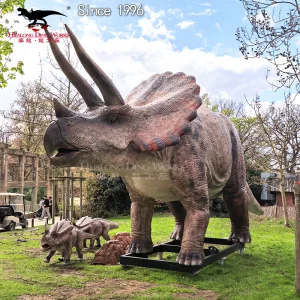
Buy Animatronic Triceratops Model Hualong Technology for Theme Park Dinosaur Exhibition Supplier, Suppliers
Procurement Details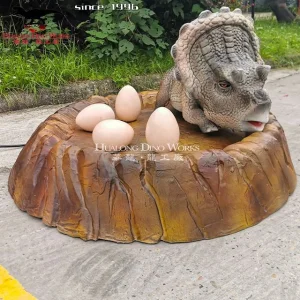
Buy Animatronic Triceratops Baby Sculpture with Hatching Egg - Life Size Interactive Dinosaur Exhibit for Theme Parks & Music Festivals Manufacturers, Factory
Procurement Details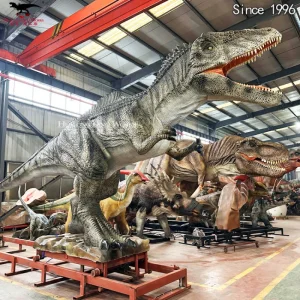
High-Quality Robotic Realistic Carcharodontosaurus Slide On The Rail Manufacturer, Factories
Procurement Details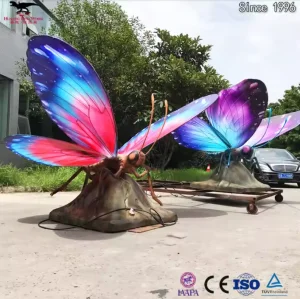
High-Quality Interactive Animatronic Insect Exhibit - Lifelike Moving Butterfly with Flapping Wings & Antenna Movements, Waterproof Outdoor Display for Science Museums/Educational Parks Suppliers, Factory
Procurement Details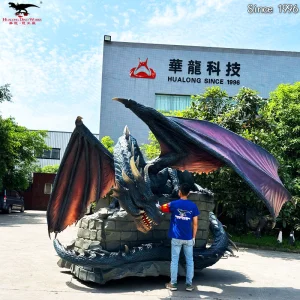
High-Quality High-Tech Animatronic Dinosaur for Museum Exhibition Custom Theme Sculpture Design Bulk Order Dinosaur Models for Theme Park Manufacturers, Supplier
Procurement Details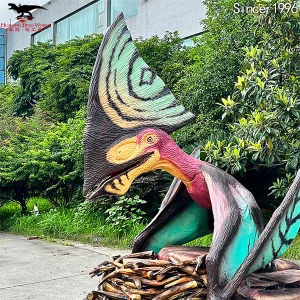
Buy Animatronic Pterosaur Dinosaur - Moving Robot with Realistic Silicone Skin & Steel Frame, Customizable Roaring Sound & LED Eyes for Theme Parks/Zoos/Shopping Malls Manufacturers, Factory
Procurement DetailsFactory Verification & Global Quality Assurance Protocol
Stringent production controls that protect theme park capital investments from procurement through multi-year operation.
Continuous Burn-In Testing
Prior to disassembling for ocean freight packaging, every completed animatronic specimen undergoes a continuous 24-to-48-hour automated mechanical burn-in cycle. Sensors track gearbox thermal rise, linkage deflection, and motor phase stability under continuous motion simulation.
Third-Party International Certification
Shipments include factory compliance certificates conforming to CE directives, ISO 9001:2015 quality assurance, and material test verification reports validated by SGS, TUV, or Bureau Veritas for tensile resilience and fire-retardant sponge compliance.
Global On-Site Deployment & Training
Factory-trained electro-mechanical field engineers deploy worldwide to oversee foundation anchoring, mechanical assembly, power distribution matching, show control programming, and venue staff maintenance training to ensure multi-year lifecycle performance.
Frequently Asked Questions for Commercial Buyers
Essential guidance on lead times, logistical handling, container packing, and operational reliability.
What are the structural materials and skin formulations used in your models?
Each model is engineered around a hot-dip galvanized or anti-corrosion primed Q235 steel skeleton driven by custom-matched DC or brushless motors and high-ratio gearboxes. The musculature is shaped with high-density flame-retardant polyether sponge (28–45 kg/m³), overlaid with a multi-layer room-temperature vulcanizing (RTV) silicone skin reinforced by an embedded fiber mesh. This composite structure resists tearing, water ingress, and extended UV radiation exposure.
Can these prehistoric animal models withstand extreme outdoor weather?
Yes. Outdoor models receive customized industrial sealing treatments. Electrical enclosures and wiring harnesses are rated to IP65/IP67 ingress standards. The high-grade silicone skin formula includes anti-ozone and anti-UV stabilizers, allowing continuous year-round operation in temperatures ranging from -30°C to +50°C, and in high-humidity, marine, or monsoon environments.
What mechanical movements and interactive control modes are available?
Standard movement sets include eye blinking, mouth opening and closing synchronized with custom audio roar tracks, 3-axis head rotation, neck nodding, chest breathing expansion, forelimb movement, and smooth lateral tail swaying. Advanced options include smoke/mist expelling, tongue extension, walking rail travel, and rider saddles. Control triggers include Doppler microwave motion detection, infrared sensors, remote controllers, coin/token acceptors, or networked central DMX show controllers.
How are oversized models packaged and shipped overseas?
Models up to 8 meters in length can typically be packed intact into standard 40-foot High Cube (40HC) ocean shipping containers. Specially scaled models exceeding 10 to 20 meters are engineered with modular flange joints at the neck, torso, and tail. These are labeled, padded with multi-layer bubble wrap, and strapped into custom internal steel cradles for container shipping. On-site reassembly requires standard bolted joints with seamless silicone touch-up kits supplied in the crate.
What trade terms and shipping options do you support?
Orders can be negotiated and dispatched under EXW, FOB, CIF, CFR, DDU, and turnkey DDP terms. Logistics channels encompass sea freight, intermodal rail (including China-Europe Railway Express), air freight for rush exhibition events, and overland trucking. Full customs documentation, bills of lading, CE compliance declarations, and origin certificates are delivered with each shipment.
Can our venue order fully customized or proprietary IP species?
Yes. Approximately 60% of our production volume consists of custom-commissioned fabrications. Whether reproducing rare Cretaceous theropods, Ice Age mammals, mythical winged dragons, or proprietary studio IP characters, our design department works directly from client CAD files, 3D digital sculpts, or concept art to deliver precise kinematic performance and visual authenticity.