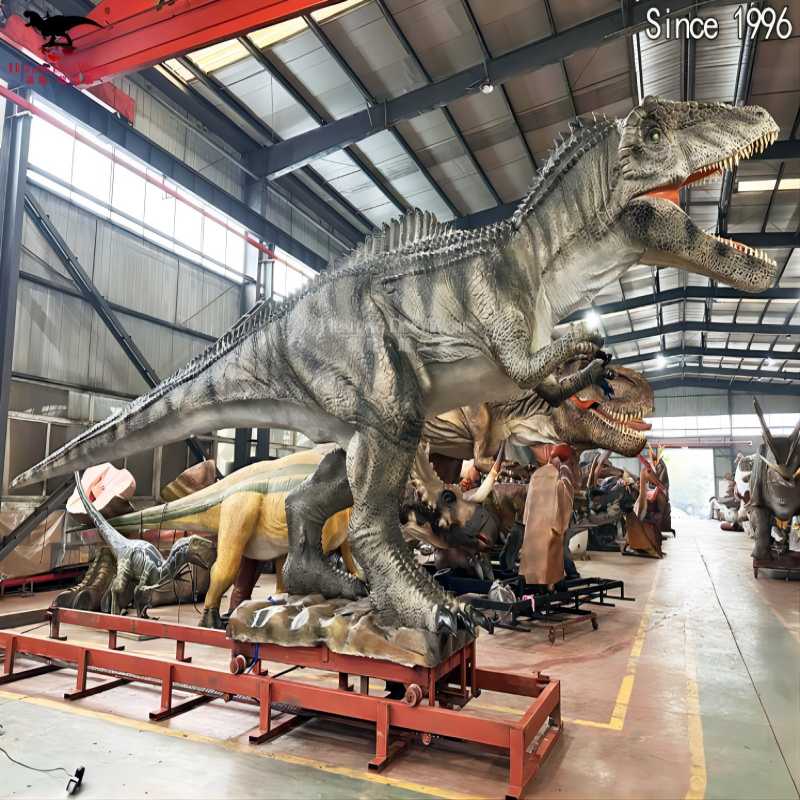
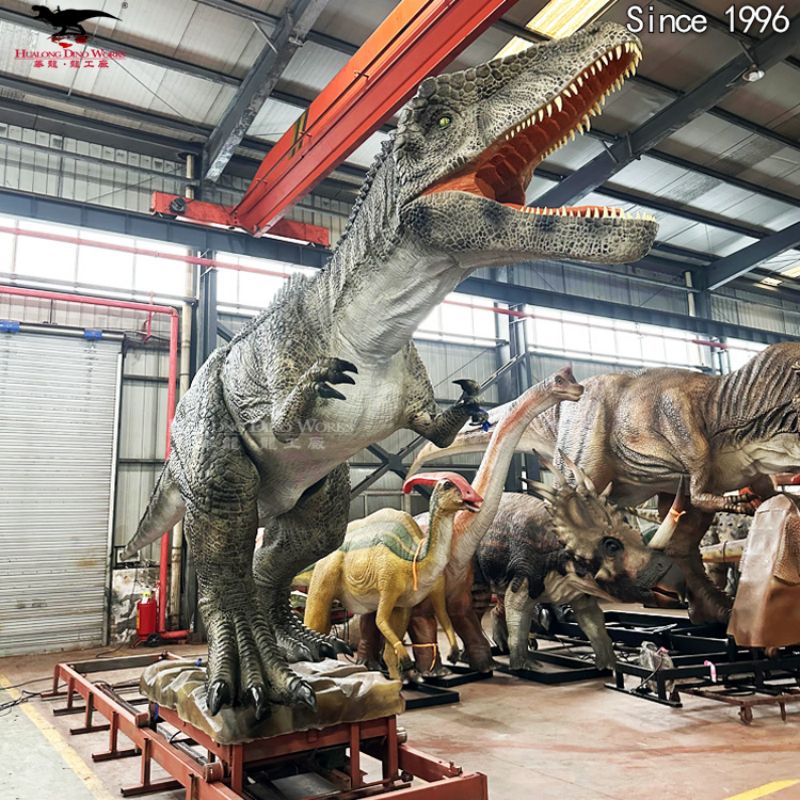
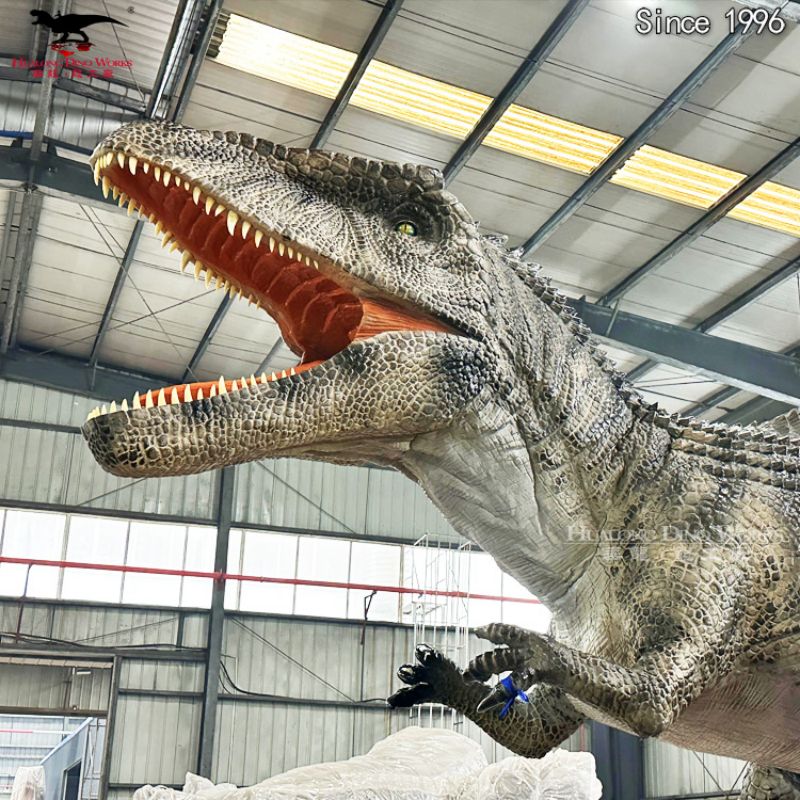
High-Quality Robotic Realistic Carcharodontosaurus Slide On The Rail Manufacturer, Factories
Product Description
The Carcharodontosaurus, whose name translates to "shark-toothed lizard," stands as a testament to the diverse and awe-inspiring array of dinosaurs that once roamed the Earth. This gigantic predator lived during the mid-Cretaceous Period, around 100 to 93 million years ago, primarily in what is now North Africa.
Size-wise, the Carcharodontosaurus was formidable. It reached lengths of up to 13 meters (about 43 feet) and weighed as much as 15 tons. Its skull alone was over 1.6 meters (5 feet) long, equipped with sharp, serrated teeth that could slice through flesh with ease. These physical attributes made it one of the largest known carnivorous dinosaurs, rivaled only by the likes of Tyrannosaurus rex and Giganotosaurus.
Paleontologists have unearthed most Carcharodontosaurus fossils in the Sahara Desert, specifically in regions that were once lush river valleys. These findings suggest that it likely lived near water sources, where it could prey on large, herbivorous dinosaurs. Its hunting capabilities were enhanced by its powerful legs and formidable jaws, which were adapted for grabbing and tearing rather than crushing.
Scientific interest in Carcharodontosaurus has increased due to several well-preserved fossils that offer insights into its anatomy and ecology. Studies of its braincase suggest that, like many theropods, it had keen senses that were crucial for hunting. The structure of its inner ear points to an adeptness for quick movements, supporting theories that it was an agile predator despite its size.
The discovery of Carcharodontosaurus has not only expanded our understanding of the predatory dinosaurs that dominated prehistoric ecosystems but also highlighted the ecological diversity of Cretaceous-period Africa. It remains a fascinating subject for both scientific study and public interest, embodying the sheer power and majesty of ancient life on our planet.


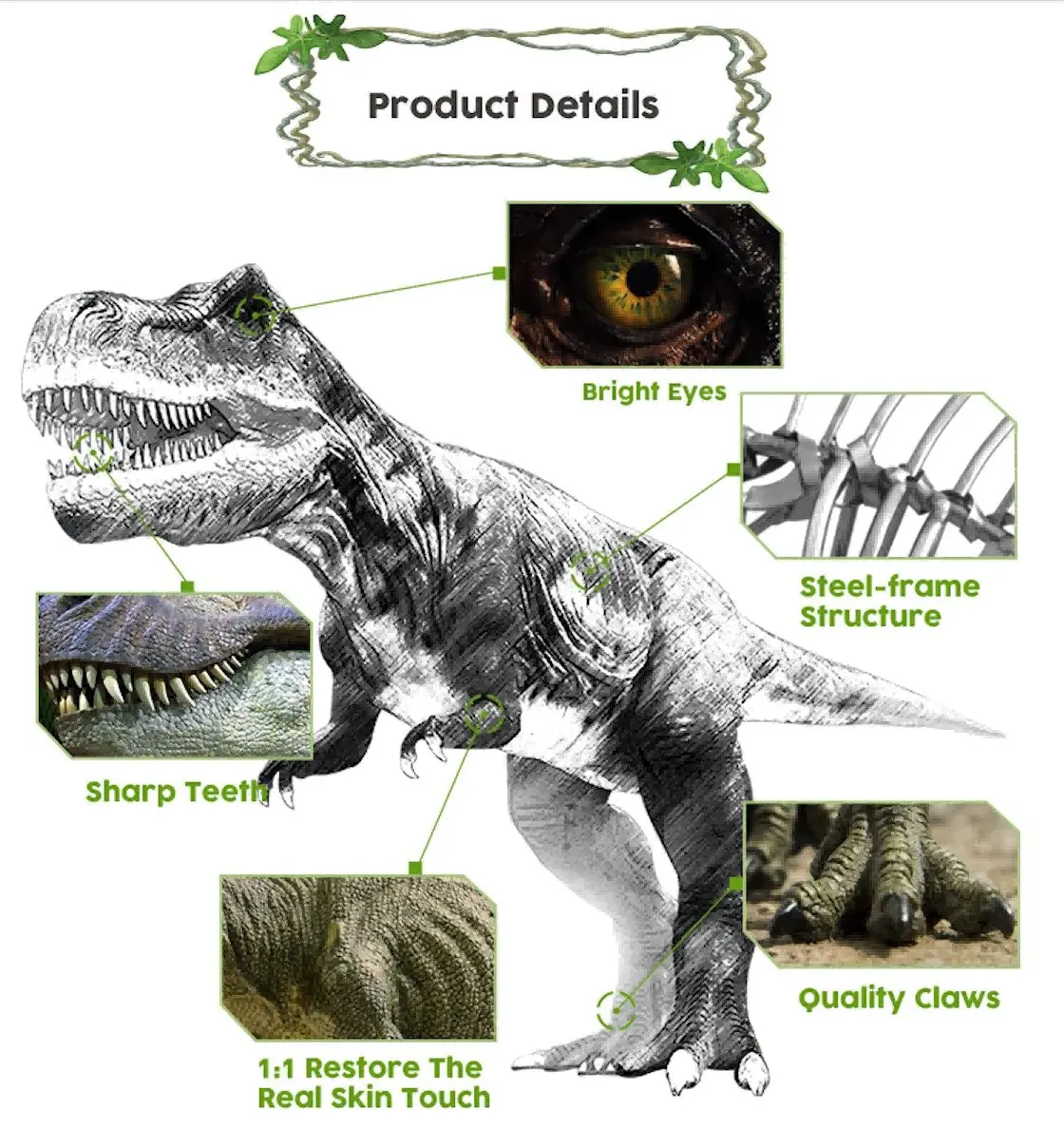
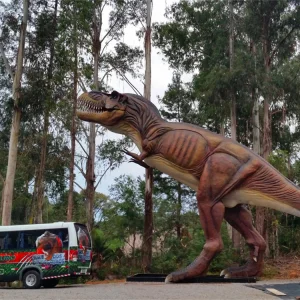
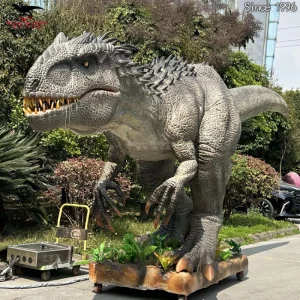
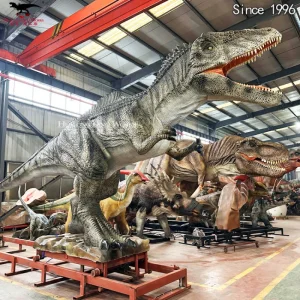
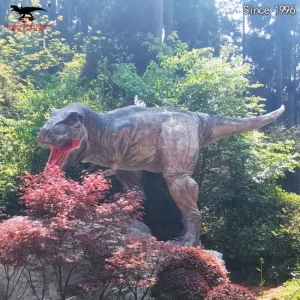
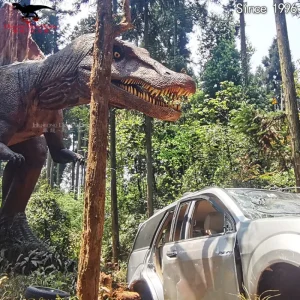
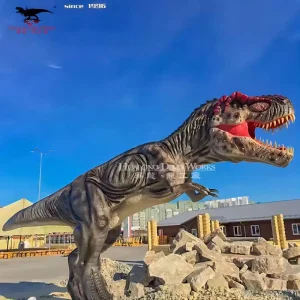
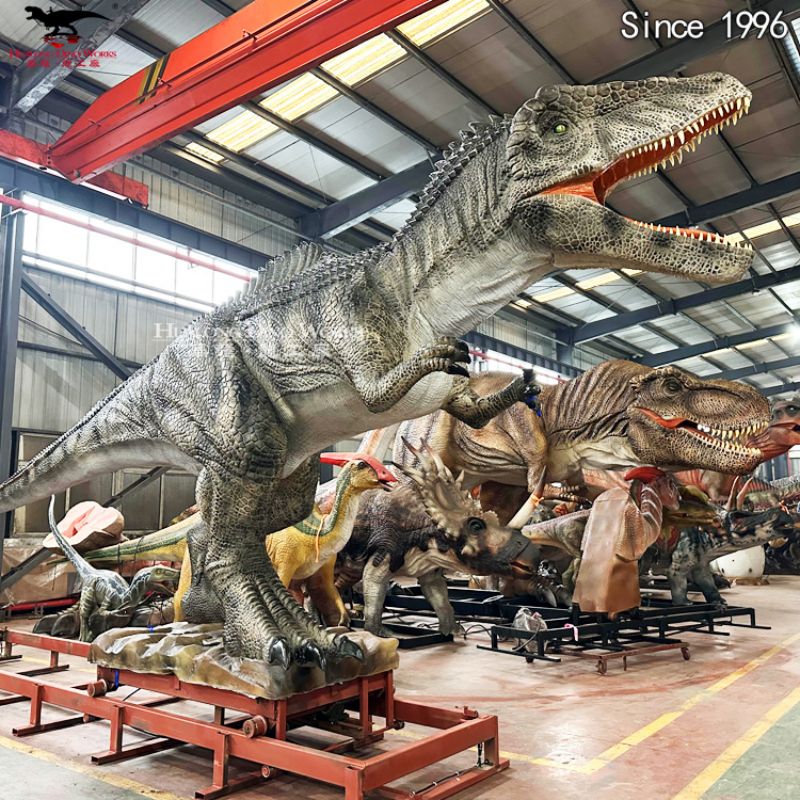
This Carcharodontosaurus can slide slowly out on the rails, and its terrifying movements, accompanied by a roaring sound, make people shudder. Let a person vividly feel the majestic imperiousness of prehistoric dinosaurs and the powerful aura when slowly approaching people. These appearance of meticulous control process, action and scene matching application technology are derived from Hualong Technology Co., Ltd. 29 years of conscientious research, precipitation until the final presentation.
| Product name | Robotic realistic Carcharodontosaurus Slide on the rail |
| Weight | 8M about 600KG, depends on the size |


Conventional Motors and Control Parts