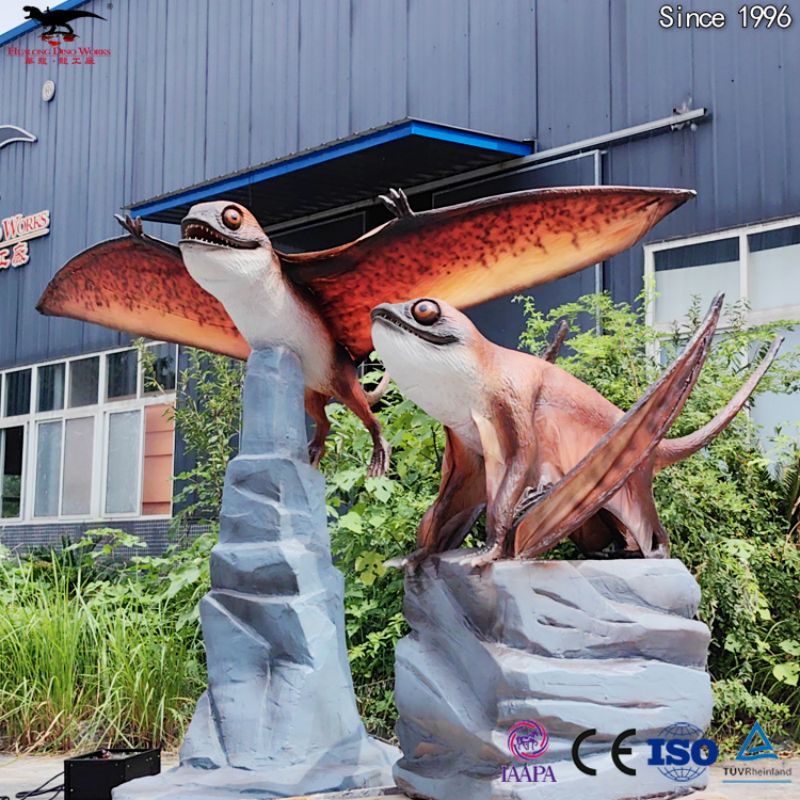
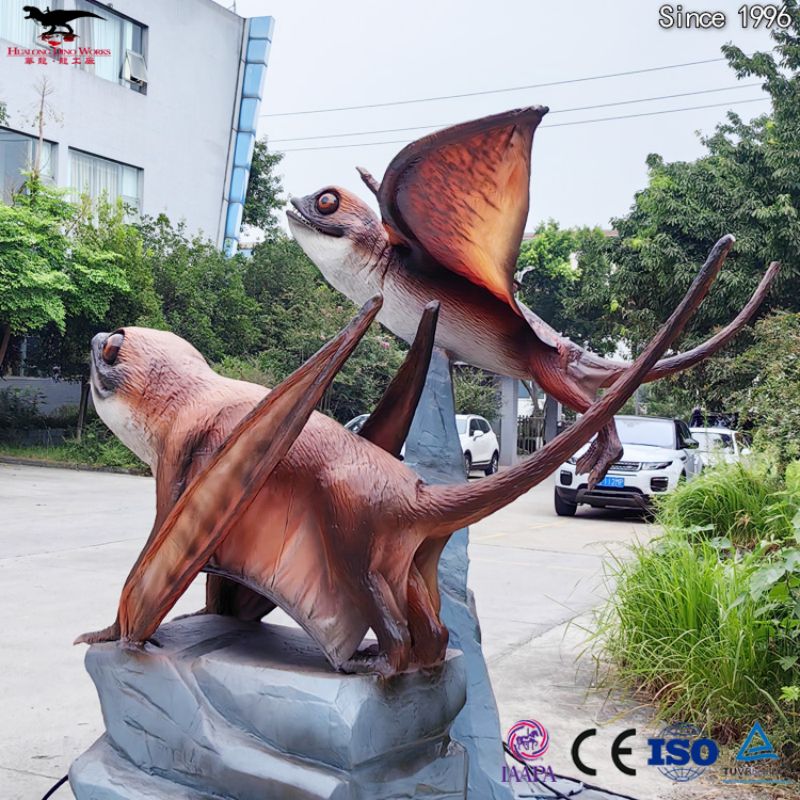
High-Quality Realistic Animatronic Sinomacrops Standing On The Rockery In Jurassic Park Manufacturer, Suppliers
Product Description
Overview of Sinomacrops
Sinomacrops, a fascinating genus of pterosaur, hails from the early Cretaceous period and offers a glimpse into the diverse world of prehistoric flying reptiles. Discovered in what is now modern-day China, the name "Sinomacrops" derives from the Latin "Sino," meaning Chinese, and "macrops," meaning large eyes, highlighting one of its most distinctive features.
Sinomacrops belonged to the Anurognathidae family, a group of small, insectivorous pterosaurs characterized by their short tails and broad, rounded wings. These features suggest that Sinomacrops was well-adapted for agile, maneuverable flight, likely flitting through ancient forests and over bodies of water in pursuit of insects. The large eyes of Sinomacrops indicate it had excellent vision, an adaptation that would have been crucial for hunting in low-light conditions, such as at dusk or dawn.


Animatronic Innovation by Hualong Manufacturer
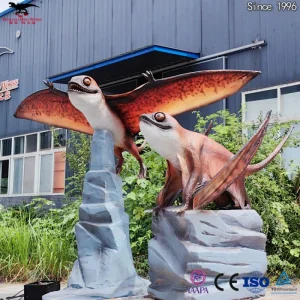
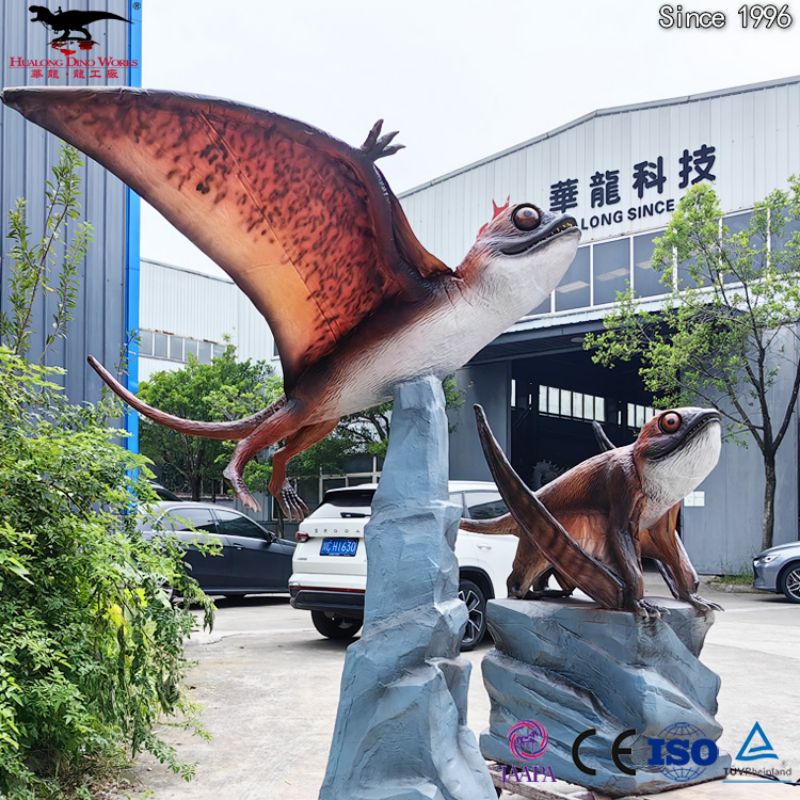
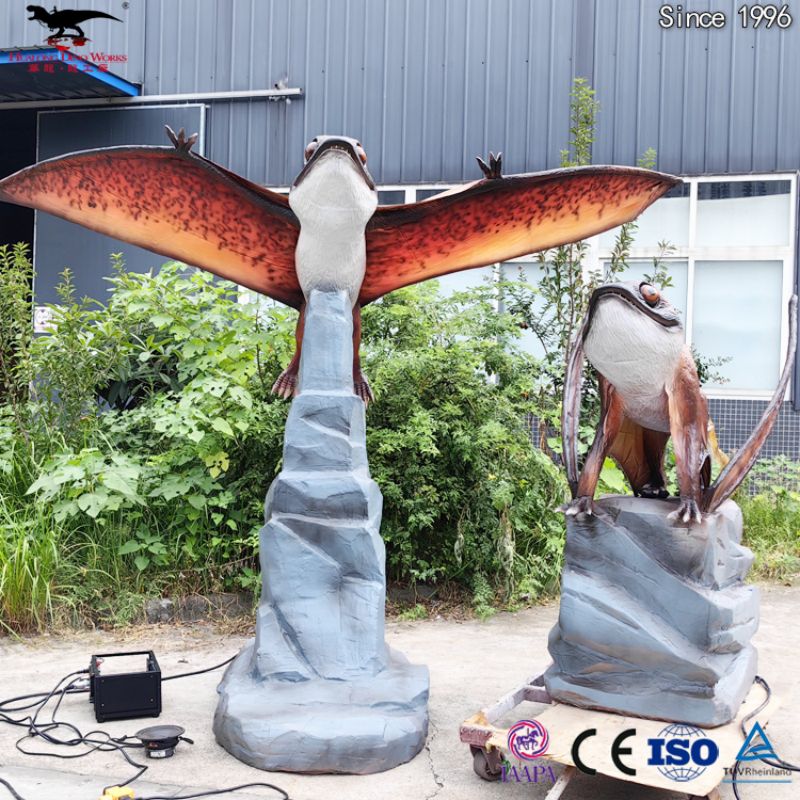
Hualong Manufacturer, renowned for its expertise in animatronics, has recently unveiled a remarkable creation: a "Realistic Animatronic Sinomacrops" positioned on a rockery, designed to bring the prehistoric world to life within the iconic Jurassic Park setting. This animatronic Sinomacrops, a genus of flying reptiles from the early Cretaceous period, is meticulously crafted to mimic the appearance and movements of its ancient counterpart. With lifelike details including realistic skin texture, vibrant colors, and accurately proportioned wings, the Sinomacrops stands proudly on a carefully designed rockery, enhancing the immersive experience for park visitors.
Hualong Manufacturer has utilized cutting-edge technology to ensure that the Sinomacrops' movements are fluid and natural. The animatronic can extend its wings, rotate its head, and even emit sounds that mimic the creature's imagined calls, creating an interactive and engaging display. The combination of advanced robotics and artistic craftsmanship results in a captivating exhibit that not only entertains but also educates visitors about the fascinating creatures that once roamed the earth. This installation in Jurassic Park represents a significant achievement in animatronics, showcasing Hualong Manufacturer's commitment to pushing the boundaries of realism and innovation in bringing extinct species back to life for modern audiences.
| Product name | Realistic Animatronic Sinomacrops standing on the rockery in Jurassic park |
| Weight | 3.5M wingspan about 150KG, depends on the size |
| Movement | 1. Mouth open and close with synchronized roaring sound 2. Head moving 3. Wings moving 4. Tail wave |
| Sound | 1. Dinosaur voice 2. Customized other sound |
| Conventional motors and control parts | 1. Mouth 2. Head 3. Wings 4. Tail |



Fossil Record and Evolutionary Significance
The fossil record of Sinomacrops, though limited, provides valuable insights into its physical characteristics and ecological niche. Its wings were membrane-based, supported by an elongated fourth finger, typical of pterosaurs. The body structure was lightweight, with hollow bones that reduced its overall weight without sacrificing strength, enabling efficient flight.
One of the most striking aspects of Sinomacrops is its size. Unlike the large, imposing pterosaurs that often dominate popular imagination, Sinomacrops was relatively small, with a wingspan estimated to be about 60 centimeters (roughly 2 feet). This small stature would have made it an agile flyer, capable of quick, darting movements to catch prey or evade predators.
The discovery of Sinomacrops adds to the rich tapestry of pterosaur diversity and highlights the varied evolutionary paths these creatures took. It underscores the adaptability and specialization that allowed pterosaurs to thrive in various ecological niches across different periods. By studying Sinomacrops and its relatives, paleontologists can better understand the complexity of prehistoric ecosystems and the evolutionary history of flying vertebrates.


Frequently Asked Questions (FAQ)
Sinomacrops was a small, insectivorous genus of pterosaur belonging to the Anurognathidae family from the early Cretaceous period, characterized by broad wings, short tails, and notably large eyes.
The realistic animatronic Sinomacrops model features a wingspan of approximately 3.5 meters and weighs around 150 kg, though exact dimensions and weight can be customized according to site requirements.
It performs realistic synchronized movements including mouth opening and closing with roaring sounds, head rotation, wing flapping, and tail waving, all powered by precision conventional motors.
Yes, in addition to preset dinosaur vocalizations, the sound system can be customized with various realistic calls and ambient sound effects to fit theme parks or exhibition needs.
Discovered in modern-day China, Sinomacrops expands scientific knowledge of pterosaur diversity, illustrating how small, agile flying reptiles evolved specialized traits for low-light aerial hunting in ancient ecosystems.