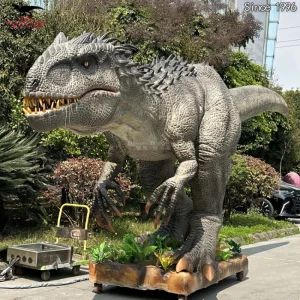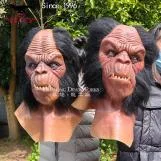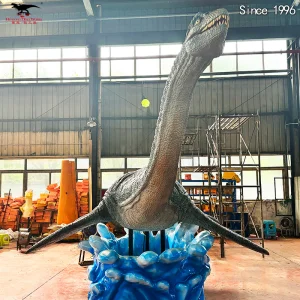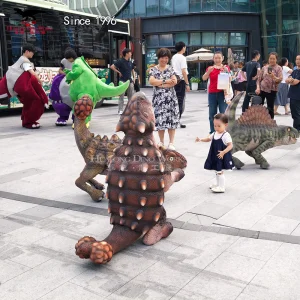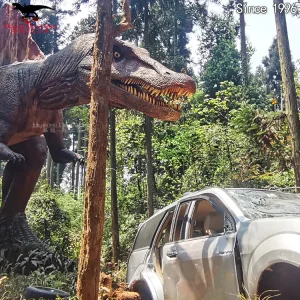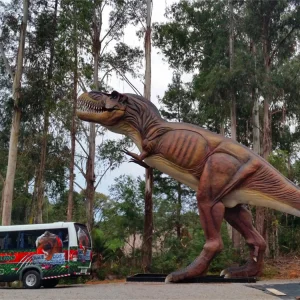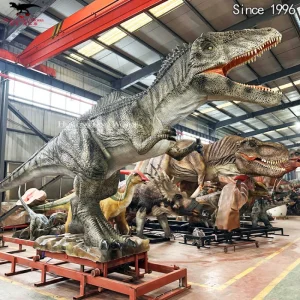
Certified Production Portfolio
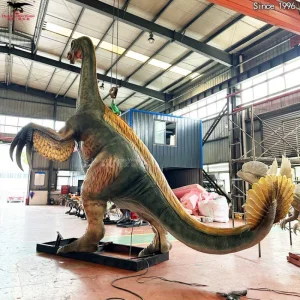
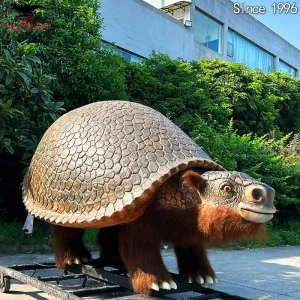
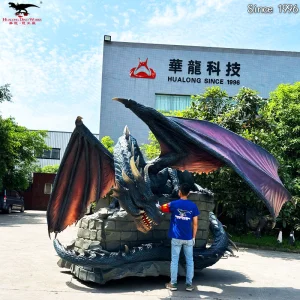
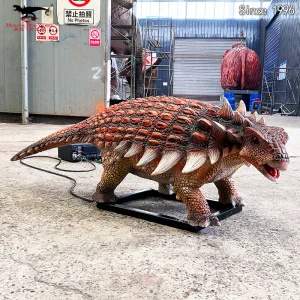
High-Spec Animatronic & Static Models Under FAT Inspection
Explore initial units engineered under standardized structural, biomechanical, and electrical safety thresholds ready for international commissioning.
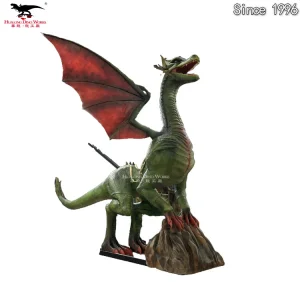
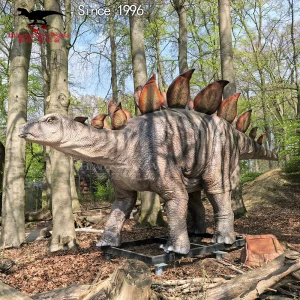
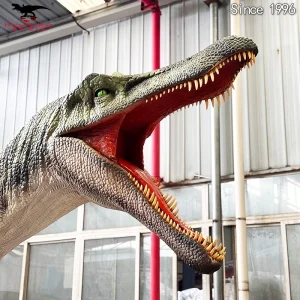
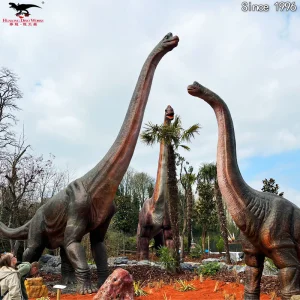
30+
Years Engineering History (Since 1996)
168+
Specialized Mechatronics Engineers
80+
Countries & Global Regions Exported
48-Hr
Continuous Non-Breakdown FAT Testing
Industry Evolution & Macro Solutions
Why Institutional Buyers Need Universal Acceptance Standards
The global animatronics industry has transitioned from manual artisan craft to high-precision robotic engineering. The lack of standardized factory acceptance protocols has historically led to early motor failures, skin fracturing, and safety liabilities.
From Folk Craft to Cybernetics
Originating from Zigong's cultural lantern craft, animatronic manufacturing has evolved into an integrated robotics vertical. Modern attractions require brushless servo integration, multi-axis algorithmic trajectory control, and finite-element structural simulation rather than crude weldments.
Eliminating Latent Field Risk
Over 74% of overseas warranty disputes stem from missing pre-shipment benchmarks. Implementing structured Factory Acceptance Tests (FAT) mitigates joint fatigue, water seepage into control units, and skin shear stresses before equipment departs the factory gate.
Standardized TCO Optimization
High-standard factories emphasize Total Cost of Ownership (TCO). Models engineered under rigorous ISO9001, CE, and SGS guidelines reduce field maintenance costs by up to 60%, delivering sustained visitor engagement across outdoor and indoor venues alike.
Rigorous Inspection Criteria
The 5 Pillars of Dinosaur Model Factory Acceptance (FAT)
A comprehensive engineering matrix designed for theme park procurement executives, municipal planners, and natural history museum curators to verify equipment performance before final sign-off.
1. Structural Kinematics & Chassis
Chassis must utilize standard national structural steel (Q235B or ASTM A36) with full anti-corrosion zinc galvanizing or multi-layer epoxy primers. Pivot shafts require heat-treated 40Cr alloy steel and self-lubricating bronze sleeve bearings to withstand dynamic moment loads exceeding 3.5× nominal operating forces.
2. Mechatronics & Reducer Gearing
Acceptance protocols mandate continuous duty (Class F insulation) copper-wound induction motors or brushless DC servo systems paired with precision helical gear reducers. Drive mechanisms must incorporate mechanical physical end-stops and soft-start/stop micro-controller routines to avoid kinematic whipping.
3. Composite Foam & Silicone Skin
Subcutaneous padding mandates high-density (≥28 kg/m³), fire-retardant polyurethane memory foam, hand-carved to biological reference. The epidermal matrix requires three-layer fiber-mesh reinforced, high-tear-strength platinum silicone with UV-50+ stabilizers and anti-fungal elastomeric coatings.
4. Electrical Ingress & Control Cabinets
Control boxes must achieve IP65 rating for outdoor parks. Internal layout requires CE/UL marked components, circuit breakers, surge protectors, optical isolation, and labeled terminal strips. Low-voltage sensors (24V DC PNP/NPN) eliminate electrocution hazards for park visitors and operating staff.
5. The 48-Hour Burn-In FAT Cycle
Prior to packaging, models must execute an uninterrupted 48-hour continuous cycle test in ambient conditions. Telemetry monitoring measures thermal output on reducers (<65°C), decibel levels under realistic operating loads, acoustic synchronization lag, and skin crease fatigue endurance.
6. Anatomical Fidelity & Paleo-Audit
Exhibition grade pieces undergo strict paleontological proportions verification. Muscle attachment definitions, dental enamel simulation, keratinous claw detailing, and pupil dilation mechanics are scrutinized against verified fossil records and museum curatorial standards.
| Inspection Dimension | Commercial Grade Baseline | Hualong Industrial Standard | Test Methodology / Standard |
|---|---|---|---|
| Chassis Steel Quality | Recycled scrap steel, single spray coat | GB/T 700 Q235B structural alloy + Hot-dip primer | Ultrasonic Weld Flaw Detection |
| Skin Tensile Strength | Single-coat silicone rubber (<1.5 MPa) | Multi-tier cross-knit glass fiber reinforced (>4.8 MPa) | ASTM D412 Tensile Stress Test |
| Weathering / UV Stability | Fades and cracks within 6–12 months | UV50+ light stabilizer + Weatherproof elastomeric sealer | QUV Accelerated 1000h Exposure |
| Drive Reducer Reliability | Alloy worm gear, unsealed lubrication | Precision helical heat-treated alloy steel gearboxes | Continuous 48h Full-Load Burn-In |
| Waterproof Enclosure Rating | IP44 or unsealed tin sheet boxes | IP65 hermetically sealed industrial enclosure | IEC 60529 Ingress Testing |
| Acoustic Synchronization | Analog loop with 500ms latency | Digital solid-state trigger synchronized to mouth servo (<20ms) | Oscilloscope Sound-Action Audit |
Enterprise Procurement Profiles
How Diverse Global Sectors Structure Acceptance Standards
Procurement specifications vary widely depending on the operating environment, audience dwell time, climate harshness, and monetization models.
Theme Parks & Resorts
Primary Acceptance Metric: High duty cycle endurance (12+ hours daily), vandal-resistant silicone skin, wind resistance up to Beaufort Scale 10, and rapid component modularity for swift field repairs.
Science Centers & Museums
Primary Acceptance Metric: Anatomical fidelity to fossil skeletal mounts, silent operating mechanisms (<42 dB at 1 meter), non-toxic low-VOC materials, and interactive pedagogical push-button / sensor triggers.
Night Tourism & Lantern Trails
Primary Acceptance Metric: Integration of high-efficiency LED internal illuminations, dynamic light show choreography (DMX512), weather-resistant translucent skinning, and temporary mount stability.
Commercial Retail & Atriums
Primary Acceptance Metric: Compact structural footprints, zero hydraulic fluid leak hazard (dry motor mechanics only), ultra-low operational vibration, and compliance with municipal indoor fire-safety codes.
Global Regulatory Assurance
Localized Support, Safety Certifications & Field Delivery
Deploying large-scale mechatronic installations requires seamless international shipping coordination, customs clearance verification, and turnkey field assembly.
International Safety Certifications
Hualong systems fully conform to CE Machinery Directive (2006/42/EC), Low Voltage Directive (2014/35/EU), and EMC Directive (2014/30/EU). Raw structural materials, flame retardants, and electrical wirings hold ISO9001, BV, TUV, and SGS laboratory validation.
Specialized Packaging & Ocean Logistics
Models exceeding 10 meters are disassembled along anatomical joint lines with concealed flange connection bolts. Skeletons are wrapped in air-cushion film, heavy non-woven textile, and moisture-absorbing silica gel inside reinforced 40HQ or Open-Top containers for global transit.
On-Site Commissioning (SAT) & Training
Our experienced field engineers deploy globally for on-site anchoring, joint skin seamless re-patching, control cabinet wiring, and Site Acceptance Testing (SAT). Comprehensive training modules are delivered to client operational staff covering routine preventive lubrication and telemetry diagnostics.
Engineering Frontiers
Technology Roadmap: The Next Era of Animatronic Engineering
Hualong R&D is pioneering the integration of modern artificial intelligence, high-torque electric servo drives, and bio-sustainable polymers into prehistoric simulation.
Vision AI & Gaze Tracking
Embedded machine vision cameras track visitor groups, dynamically adjusting head orientation, eye blinking, and roar intensity to simulate cognitive predatory interest and natural organic reaction.
Pure High-Torque Servos
Replacing traditional AC gear motors with closed-loop programmable servo drives allows multi-axis fluid motions, eliminating sudden mechanical jarring, gear backlash, and operational motor whine.
Digital Twin Telemetry
IoT edge controllers continuously report drive motor winding temperatures, cycle counts, torque loads, and environmental humidity back to central maintenance dashboards for predictive servicing.
Bio-Based Polymers
Next-generation skin matrices utilize recycled, environmentally degradable silicone bases offering 30% higher elasticity and enhanced flame-retardant performance under extreme global temperatures (-30°C to +55°C).
Technical Clarifications
Frequently Asked Questions on Factory Acceptance Standards
Critical engineering insights for procurement committees, project managers, and park operators.
What specific materials and standards comprise an industrial-grade animatronic dinosaur?
Every professional model built by Zigong Hualong Science And Technology Co., LTD. consists of four structural layers: (1) An internal skeleton welded from national standard Q235B structural steel, treated with three layers of anti-rust polyurethane coatings; (2) Mechanical joints driven by high-efficiency copper-wound motors and precision cycloidal or helical gear reducers; (3) Musculature shaped from 28–35 kg/m³ high-density open-cell flame-retardant sponge foam; and (4) An epidermal matrix composed of hand-sculpted platinum-cured silicone rubber bonded with multi-layer high-tensile glass-fiber mesh.
How do you verify outdoor weatherproofing for year-round sub-zero or equatorial climates?
Our outdoor acceptance criteria require formulation customization based on the client's geographic coordinates. For tropical rainforest environments (high humidity and torrential rain), all internal mechanical joints receive automotive-grade waterproof grease, control boxes are certified IP65 with internal condensation heaters, and skins receive anti-fungal biocides. For desert or sub-zero regions (-30°C to +50°C), specialized cold-resistant silicone blends and motor low-temperature synthetic lubricants prevent rubber brittleness and mechanical seizure.
What is the standard procedure for the Factory Acceptance Test (FAT)?
The FAT protocol entails four sequential milestones: (1) Dimensional and anatomical fidelity audit against approved 3D blueprints; (2) Weld integrity and mechanical clearance audit under static load; (3) The 48-Hour Continuous Run Test, where models execute dynamic motion sequences without interruption while motor temperature, decibel levels, and kinematic fluidness are recorded via telemetry; and (4) Pre-packaging inspection documenting electrical grounding resistance (<0.1 Ω), silicone skin flexibility, and complete spare parts verification.
Can models be customized for specific paleontological species or custom IP characters?
Yes. With an in-house design and engineering department of 168+ specialists, any prehistoric species, mythical creature (such as animatronic dragons), ice-age mammal, or client-specified fantasy IP can be realized. We provide end-to-end design, starting from paleontological reference sketches, 3D kinematic simulation, mechanical structure stress analysis, down to custom paint schemes and synthesized acoustic profiles.
What international shipping terms, export documentation, and on-site support are provided?
We support EXW, FOB, CFR, CIF, DDU, and turnkey DDP terms via sea freight, rail multimodal transit, or air transport. Every order includes complete customs declaration dossiers: CE declaration of conformity, ISO9001 factory inspection certificates, material safety data sheets (MSDS) for silicone compounds, fumigation certificates for timber packaging, and complete assembly schematics. Furthermore, Hualong provides overseas installation engineering crews for on-site erection, seamless skin joining, and Site Acceptance Testing (SAT) worldwide.
Extended Engineering Range
Advanced Robotic, Thematic & Interactive Models
A broad array of custom models, walking robots, interactive costumes, and specialized rail mechanisms built to the same strict manufacturing and safety guidelines.