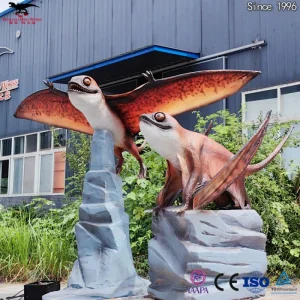
Flagship Museum Exhibit Installations
Biomedically accurate, interactive mechatronic systems designed for high-density public venues.
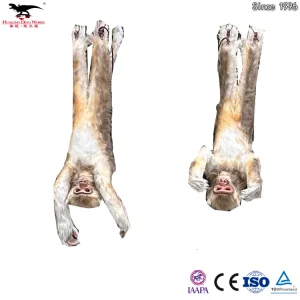
High-Quality Animatronic Monkey with Blinking Eyes & Realistic Sounds
View Specifications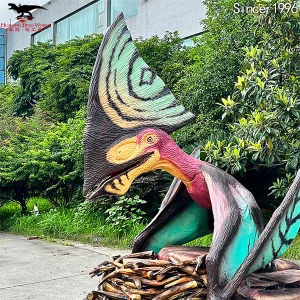
Buy Animatronic Pterosaur Dinosaur - Moving Robot with Realistic Silicone Skin
View Specifications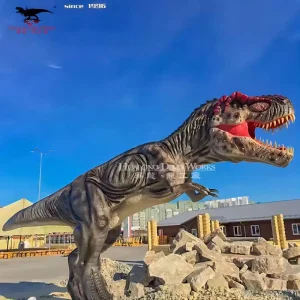
High-Quality Animatronic T-Rex Aggressive Dinosaur Simulation
View Specifications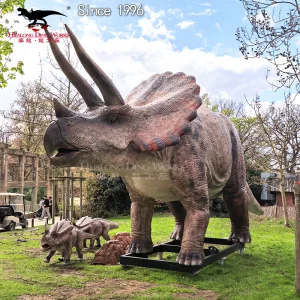
Buy Animatronic Triceratops Model Hualong Technology for Exhibitions
View Specifications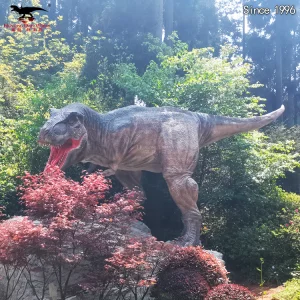
High-Quality T-Rex Dino Robot Dinosaur Model Theme Park Equipment
View Specifications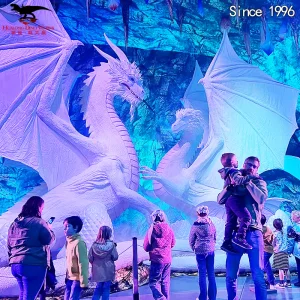
High-Quality Custom White Dragon Model CE Certified Mythical Sculpture
View Specifications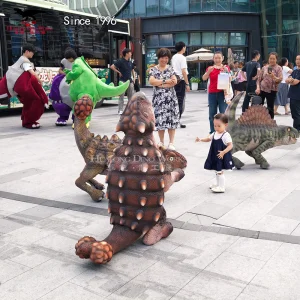
High-Quality Four-Legged Dino Robot Dynamic Interactive Walking Mascot
View Specifications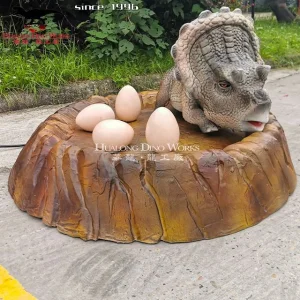
Buy Animatronic Triceratops Baby Sculpture with Hatching Egg
View SpecificationsEngineering Interactive Pedagogical Installations for Modern Curators
The convergence of biomechanical kinematics, edge AI sensory arrays, and industrial durability in institutional installations.
In the contemporary landscape of natural history museums, science centers, and cultural heritage institutions, passive dioramas are rapidly being superseded by sensory-driven, interactive installations. Today's visitors—conditioned by digital ubiquity—demand kinetic, responsive encounters that communicate complex evolutionary biology and physical principles intuitively. Zigong Hualong Science and Technology Co., Ltd. has stood at the core of this industrial evolution since 1996, transforming traditional sculptural fabrication into multidisciplinary mechatronic engineering.
Operating from our expansive 50-acre manufacturing bases in Zigong, China, our engineering teams balance biological fidelity with severe-duty mechanical resilience. A museum installation is subject to unique operational stresses: continuous 10-to-12-hour duty cycles, unmonitored physical interaction by diverse audiences, and rigorous local municipal safety codes. Addressing these vectors necessitates a systematic manufacturing paradigm encompassing computational kinematics, flame-retardant structural polymers, and localized edge-computing architectures that eliminate latency in user engagement.
Mean Time Between Failures (MTBF)
Engineered for high-throughput public exhibits with an audited MTBF exceeding 8,500 hours under continuous cyclic loading, utilizing brushless servo drives and CNC-machined joint pivots.
Life Safety & Fire Rating
Skin membranes synthesized with high-density platinum-cured silicone infused with flammability suppressants adhering strictly to UL 94 V-0 and European EN 13501-1 Class B specifications.
Adaptive Kinetic Feedback
Multi-modal interactive nodes integrating LiDAR, computer vision, and ultrasonic arrays to trigger contextual behavioral patterns based on visitor posture and spatial density.
The Zigong Industrial Cluster: Supply Chain Moats
Capitalizing on an unbroken 30-year legacy of paleontological modeling and advanced structural steel fabrication.
The manufacturing infrastructure of Zigong, Sichuan represents the global ground-zero for animatronics and structural exhibition modeling. This concentrated geographic cluster provides decisive strategic advantages that European or North American domestic custom-shops cannot replicate at scale: a hyper-localized supply chain where metallurgical treatment, precision gear-cutting, custom high-torque motors, and specialty elastomer formulating happen within an 80-kilometer radius. This industrial density directly translates into accelerated prototyping, unprecedented economies of scale, and total quality traceability.
FEA Structural Design
Every internal armature undergoes Finite Element Analysis (FEA) to simulate dynamic torsional stress under continuous visitor interaction and seismic considerations (IBC/Eurocode 8).
Robotic Drive Integration
Welded Q235 structural steel chassis equipped with high-efficiency IP65 brushless gear motors, solid-state relays, and industrial PLC control blocks optimized for clean, hum-free museum gallery operation.
Anatomical Biometrics
Hand-carved high-density flexible polyurethane cushioning forms anatomically authentic musculature, informed directly by paleontological and zoological consultation for accurate educational value.
Elastomeric Matrix
Multi-layered architectural silicone coatings hand-textured to emulate dermis scales and micro-wrinkles, reinforced with three-dimensional woven mesh preventing surface tearing.
Enterprise Scale & Verification Metrics
Standardized, certified workflows trusted across 80+ international jurisdictions.
Localization Support, Grid Compliance & Certifications
Mitigating technical, electrical, and legal liabilities for overseas institutional projects.
Grid & Voltage Harmonization
Factory-wired power supplies built explicitly for local grids: 110V 60Hz (North America), 230V 50Hz (UK/EU), or 100V 50/60Hz (Japan). In-line transformers, surge arrestors, and CE/UL-listed components ensure plug-and-play installation without field modifications.
Regulatory Certification Package
Every shipment is delivered with comprehensive documentation dossiers including ISO9001 quality audits, CE Machinery Directive declarations, SGS material toxicology verifications, and BV/TUV third-party factory inspection test certificates.
Bilingual Turnkey Field Engineering
Eliminating deployment risk through certified field engineers sent globally to supervise site rigging, heavy anchoring, mechanical alignment, PLC commissioning, and local technician operational training in compliance with local occupational safety regulations.
Emerging Industry Trends in Museum Installations
How cutting-edge interactive installations are evolving to meet 2026-2030 visitor expectations.
Non-Contact Spatial Interactivity
Post-pandemic spatial designs prioritize vision-guided and ultrasonic activation over physical touchscreens, allowing collective visitor gestures to drive installation kinematics naturally.
Acoustic Thermal Camouflage
Modern gallery curators demand whisper-quiet sound thresholds. Modern drives integrate high-torque helical reducers and acoustic-damped motor housings keeping mechanical noise under 38 dB.
Kinematic-Digital Synchronization
Direct DMX512 and Art-Net integration links mechanical movements precisely with digital projection mapping, environmental audio landscapes, and architectural intelligent lighting.
Eco-Circular Materials
Transition toward low-VOC waterborne silicone coatings and recyclable core alloys, matching global institutional mandates for sustainable, low-carbon exhibit lifecycles.
Localized Application Scenarios
Engineered adaptations tailored to diverse visitor throughputs and structural environments.
Natural History & Paleontology Halls
Scale-accurate animatronic dinosaurs and skeletal reconstructions integrated directly into chronological evolutionary pathways. High anatomical fidelity vetted against fossil records, featuring programmable breathing and roaring behaviors.
Children's Hands-On Discovery Centers
Reinforced mechatronic units built with zero-pinch joints and soft-touch elastomer outer shells. Designed to withstand extreme physical tactile engagement, equipped with interactive control levers and audio triggered response nodes.
Touring Blockbuster Exhibitions
Modularized structural frameworks designed for rapid deployment, repeated teardown, and containerized transport. Standardized quick-connect military-grade wiring looms drastically cut setup cycles to days rather than weeks.
Frequently Asked Questions for Museum Curators & General Contractors
Comprehensive technical guidance addressing engineering, safety compliance, logistics, and total cost of ownership.
What engineering measures ensure safety in high-density visitor environments?
How are museum interactive installations maintained over multi-year exhibits?
Can Hualong build custom installations from curator sketches or CAD files?
What trade terms and shipping methods are supported for international deliveries?
How do the installations interface with museum-wide show control systems?
What testing is conducted prior to international export?
Interactive Sculptures & Specialized Installations
Custom biomechanical creations engineered for natural reserves, science exhibitions, and themed destinations.
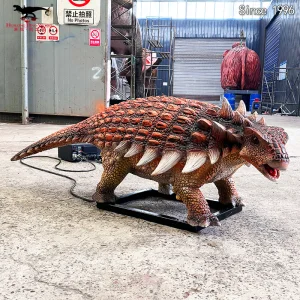
High-Quality Custom Ankylosaurus Model Weatherproof Cretaceous Tank Exhibit
View Specifications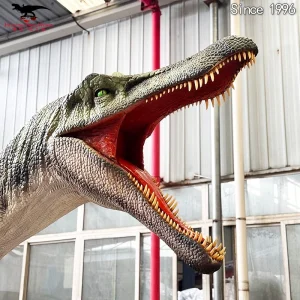
High-Quality Custom Baryonyx Weatherproof Fish-Eating Dinosaur Simulation
View Specifications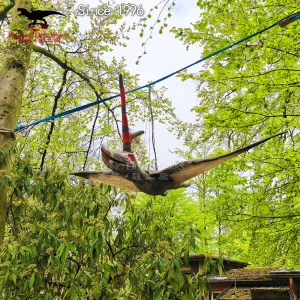
Buy Custom Realistic Pterosaur Animatronic Dinosaur Restoration
View Specifications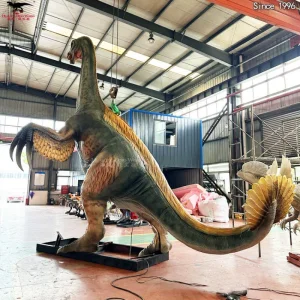
Buy Animatronic Robotic Therizinosauria For Theme Parks and Science Tours
View Specifications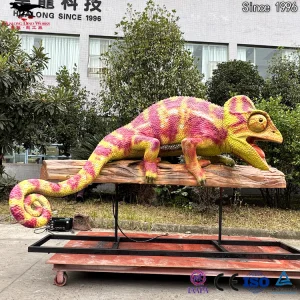
Buy Custom Pitch Theme Park Interactive Sculpture Simulated Giant Chameleon
View Specifications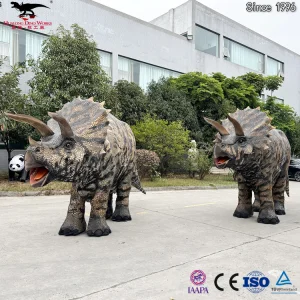
Buy Triceratops Costume with Moving Jaw & Leg Movement For Events
View Specifications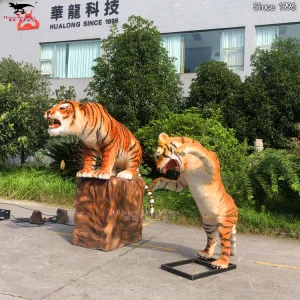
Buy Robot Model Animatronic Animals for Custom Tiger Model Weatherproof
View Specifications