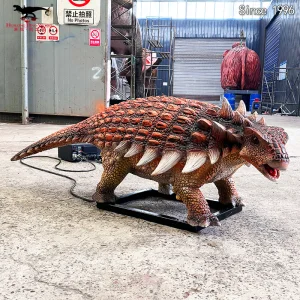
Armored Scute Engineering
Explore master-sculpted animatronic organisms, skeletal articulated replicas, and interactive installations designed for natural history museums, experiential galleries, and high-traffic discovery pavilions worldwide.
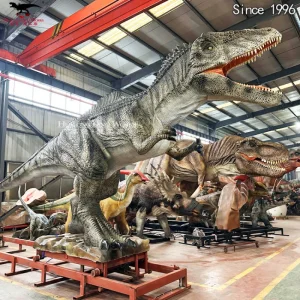
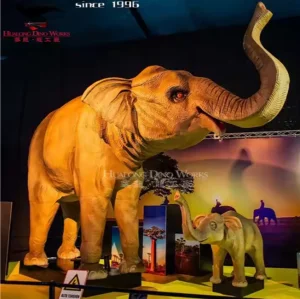
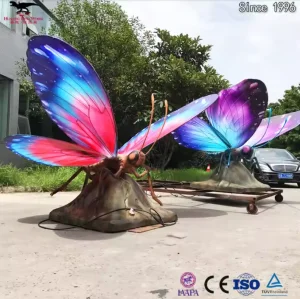
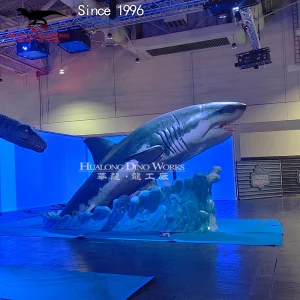
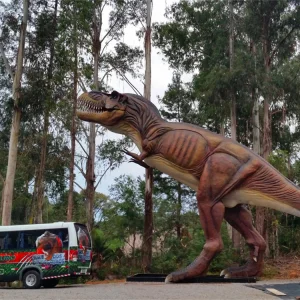
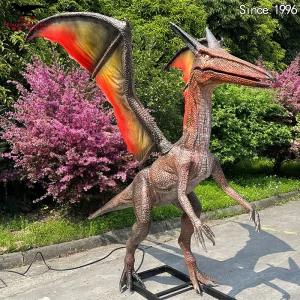
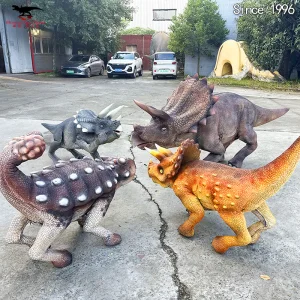
Modern exhibition curation has decisively transitioned from passive vitrine display models toward tactile, four-dimensional immersive dioramas. This macro shift necessitates Tier-1 prop fabrication factories capable of integrating anatomical morphology, digital algorithmic engineering, and rigorous public safety frameworks.
Fabrication starts from peer-reviewed paleobiological documentation and CT skeletal scans. Prop skeletons and musculature armatures are calibrated down to true-to-life skeletal articulated angles, guaranteeing historical accuracy for accredited institutions, science centers, and academic university museums.
Kinetic museum installations feature closed-loop brushless servo assemblies, harmonic speed reducers, and silent pneumatic articulation. Movement routines replicate natural respiratory cycles, nictitating eye membranes, and multi-axis predatory vocalization cycles without acoustic mechanical hum.
Unlike disposable cinematic film sets, museum exhibits demand uninterrupted 10-to-12 hour daily operational cycles for 5 to 10 years. Our composite polymers, platinum-cure room temperature vulcanizing (RTV) silicones, and powder-coated Q235 structural steel guarantee zero material breakdown under public contact.
Public assembly environments present zero margin for error regarding flame propagation, structural tipping hazards, or toxic off-gassing. Zigong Hualong Science and Technology ensures comprehensive alignment with cross-border municipal codes and international fire-life safety protocols.
| Evaluation Parameter | Standard / Protocol Reference | Factory Fabrication Formulation | Institutional Compliance Impact |
|---|---|---|---|
| Flame Spread Index (FSI) | ASTM E84 Class A / DIN 4102 B1 | Tri-component ATH flame-retardant additive integrated directly into high-density foam & silicone outer dermis | Certified Pass Permanent permit grant for high-occupancy civic museum galleries |
| Volatile Organic Compounds (VOC) | ISO 16000-6 / California Prop 65 | Medical-grade cross-linked platinum silicone matrices cured via closed thermal chambers; zero aromatic solvents | Certified Zero Odor Zero micro-chemical hazing inside enclosed climate-controlled vitrines |
| Structural Wind & Seismic Load | ASCE 7-22 / Eurocode 3 (EN 1993) | Solid-mechanics FEA finite element analysis; internal Q355 structural steel trusses with counter-torque baseplates | PE Stamped Engineered for seismic zones 4 and outdoor unanchored wind-gusts up to Beaufort 10 |
| Electrical Safety & EMC | EN 60204-1 / UL 508A / CE LVD | IP65-rated sealed industrial switch cabinets, SELV (Safety Extra-Low Voltage) 24V/48V internal servo wiring | Global Direct Connect Eliminates electrical inspection bottlenecks across North America & the EU |
Our project management does not end at factory crating. Certified Hualong field engineers deploy across Europe, the Middle East, Southeast Asia, and the Americas to oversee mechanical uncrating, sub-frame anchorage, optical alignment, and central DMX show-control programming directly within museum gallery spaces.
Every exhibition prop contract is delivered alongside an indexed 36-month preventive maintenance inventory, including pre-pigmented silicone topical touch-up kits, backup servo actuators, solid-state optical sensors, and modular micro-controllers to guarantee zero exhibit downtime during peak visitor seasons.
Exhibition props require contextual engineering matched to environmental stressors, viewing distances, visitor dwell times, and interpretive objectives across diverse institutional typologies.
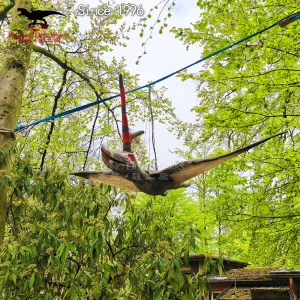
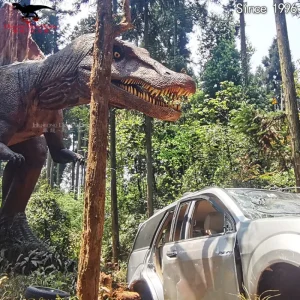
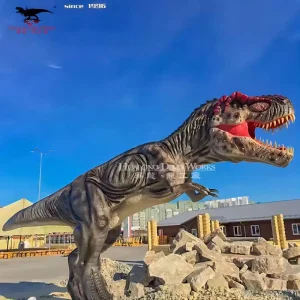
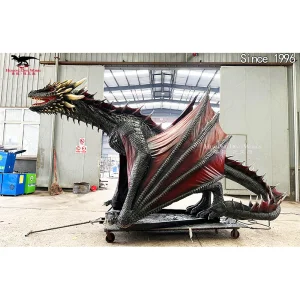
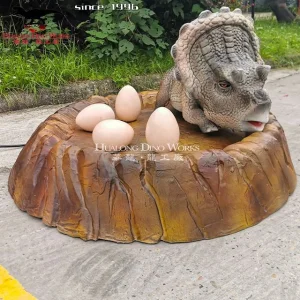
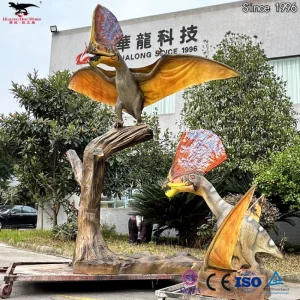
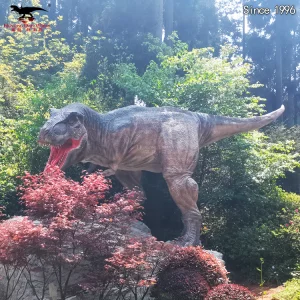
Full-scale Mesozoic and Cenozoic predator-prey dioramas. Props feature hand-imprinted osteoderm patterns, scientifically vetted keratinaceous beak sheaths, and synchronized digital vocalizations derived from bio-acoustic cavity resonance modeling.
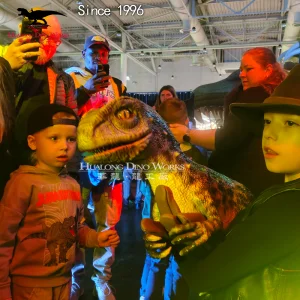
Tactile, ultra-durable installations built to withstand continuous visitor contact. Integrated capacitive touch pads trigger mechanical muscle expansion, simulated pulse cycles, or internal illuminated organs that demonstrate comparative anatomical biology.
Corrosion-immune fiberglass and marine-grade polyurethane exhibits engineered for high-humidity, saline atmospheres. Models replicate Megalodon sharks, prehistoric Mosasaurs, and deep-sea cephalopods with zero risk of mold colonization.
High-cycle animatronic installations tied into vehicle dispatch sensors and multi-channel show action controllers. Units are engineered for tens of millions of repetitive movement cycles without structural metal fatigue or cable shearing.
As artificial intelligence, computer vision, and advanced bio-mimetic polymers converge, museum exhibition prop fabrication is shifting from static replication toward self-diagnosing, responsive intelligent scenography.
Every skeletal prop armature is simulated under finite element stress testing in virtual 3D before laser cutting. This predictive analysis identifies stress concentrations, optimizing steel wall thickness and motor gearing ratios to achieve a 40% reduction in weight without compromising rigidity.
Traditional passive infrared (PIR) triggers are replaced by wide-angle edge-AI neural cameras embedded within exhibit scenery. Animatronic predator eyes and head pivots accurately track moving visitors, dynamically modulating roaring acoustics based on audience proximity and ambient background decibels.
Our material chemistry laboratories are testing room-temperature vulcanizing silicones modified with microscopic micro-capsule matrices. Minor surface scuffs and puncture blemishes heal autonomously under mild thermal exposure, drastically decreasing maintenance overhaul cycles for high-contact science center displays.
Onboard IoT transceivers continuously monitor motor coil thermal curves, joint friction amperages, and pneumatic pressures. The telemetry gateway alerts facility engineers via secure mobile API before mechanical breakdown occurs, guaranteeing seamless exhibit operation.
Direct procurement from our Zigong factories follows a transparent, documentable manufacturing lifecycle designed to satisfy institutional auditing committees, general contractors, and museum board directors.
Scientific validation of species posture, integumentary textures, and skeletal dimensions against museum curator references and 3D orthographic files.
Welding of National Standard Q235/Q355 steel frames, multi-pass rust-proofing treatments, and integration of industrial reducers and servos.
Application of high-resilience fire-resistant foam, followed by multi-layered elastic skin mesh, hand-texturing, and UV-stable acrylic sealants.
Unbroken 48-hour automated cycle test measuring motor temperature, joint friction, electrical current draw, and audio-synchronicity under factory load.
Detailed technical answers to the most critical inquiries submitted by museum exhibition committees, scenographers, and procurement managers.
Expanding the boundaries of mechanical performance: examine our large-scale experiential installations, stage touring props, and custom bionic animatronics engineered for demanding commercial venues.