
Flagship Kinetic & Bionic Simulation Animal Displays
Engineered for extreme environmental exposure with UV-stabilized polyurethane formulations, cold-cast resin skeletal anchors, and micro-servo kinesthetics.
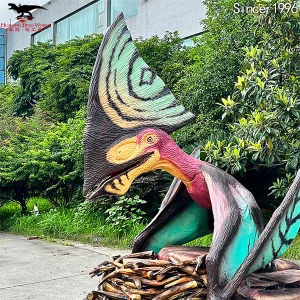
Animatronic Pterosaur Dinosaur Moving Robot
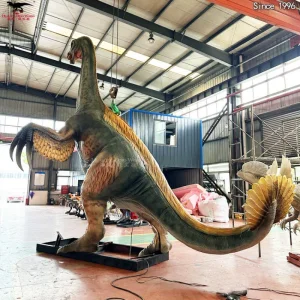
Animatronic Robotic Therizinosauria Park Model
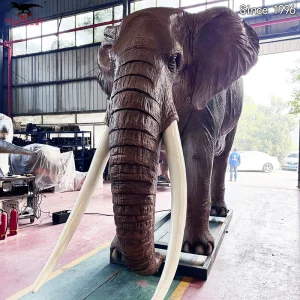
Custom CE Certified Electrical Robotic Animal
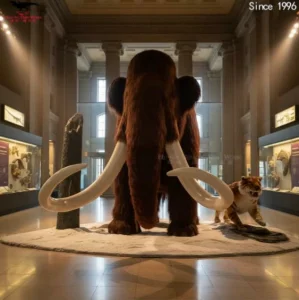
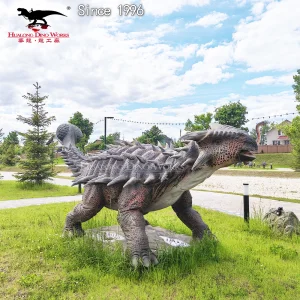
Armored Dinosaur Animatronic Ankylosaurus
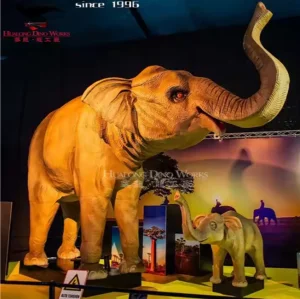
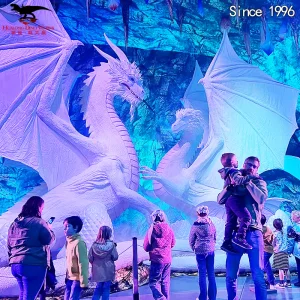
Custom White Dragon Fantasy Sculpture
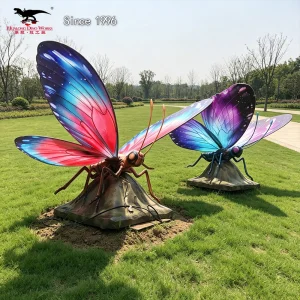
Lifelike Giant Animatronic Insect Model
Global Macro Landscape of Resin Simulation Animals & Kinetic Biomimetics
The commercial convergence of advanced polymer composite engineering, precision mechatronics, and experiential location-based entertainment (LBE).
The Geopolitical & Industrial Manufacturing Nexus
Over the past three decades, the global supply chain for simulation fauna, prehistoric animatronics, and large-scale bionic models has crystallized around specialized manufacturing hubs. Foremost among these is Zigong, Sichuan—globally recognized as the industrial epicenter of realistic simulation models. Representing more than 85% of worldwide production capacity, this specialized regional cluster merges generational artisan lantern-welding techniques with advanced aeronautic-grade composite polymers.
Modern procurement managers no longer source simple fiberglass shells; modern demand requires multi-degree-of-freedom (DoF) internal articulated kinetic linkages encapsulated in cold-cast elastomer matrices. By sourcing directly from Tier-1 integrated manufacturing facilities like Zigong Hualong Science and Technology Co., LTD. (operating continuously since 1996), overseas theme park conglomerates, zoological parks, and governmental tourism developers bypass tier-3 trading intermediaries, capturing substantial cost-efficiency while ensuring strict material provenance and engineering integrity.
Capital Expenditure (CapEx) vs. Lifetime Value (LTV)
In experiential hospitality and destination retail, footfall velocity correlates directly with sensory visual impact. Commercial real estate developers face unprecedented competition from digital media; physical destinations must create tangible, awe-inspiring landmarks. Resin simulation animals—ranging from 1:1 scale African savannah wildlife to 20-meter Cretaceous sauropods—function as prime anchors with immediate social media engagement and high dwell times.
From a financial return model, industrial-grade resin composites offer significant return on investment. With an operational design life exceeding 12 to 15 years under exterior atmospheric weathering (UV-A/UV-B index 11+, rainfall, freeze-thaw thermal cycling from -20°C to +50°C), the annualized amortized depreciation cost of a factory-direct bionic sculpture represents less than 4% of initial acquisition CapEx. This makes custom simulation models one of the most cost-effective capital additions within modern experiential leisure master planning.
Composite Polymer Systems: Resin Matrix Chemistry & Tensile Performance
An engineering breakdown of unsaturated polyester resins (UPR), vinyl esters, glass fiber density, and elastomeric silicone skin coatings.
Resin Matrix Selection: UPR vs. Vinyl Ester
The structural shell relies on high-grade Unsaturated Polyester Resin (orthophthalic/isophthalic) blended with thixotropic additives to achieve dimensional stability during hand lay-up and vacuum infusion processes. For extreme maritime or high-salinity coastal park environments, vinyl ester resins are deployed, increasing hydrolytic resistance and mitigating osmotic blistering by over 400% compared to standard commercial resins.
Multi-Axial E-Glass Reinforcement
To resist wind-shear stresses (tested to Beaufort Scale 11/12) without micro-fissuring, our laminators integrate stitched multi-axial E-glass fiber rovings (300g/m² chopped strand mat combined with 600g/m² woven roving). This balances tensile strength (120–160 MPa) with elastic deflection resilience. High-load stress nodes, such as hip anchors and suspension points, incorporate internal cold-rolled carbon steel gusset plates laminated directly into the polymer matrix.
UV-Stabilized Aliphatic Sealants
Unprotected resins rapidly suffer polymer chain degradation, photo-oxidation, and yellowing when exposed to continuous outdoor solar radiation. Our finishing protocol applies a dual-layer fluorocarbon and aliphatic polyurethane gelcoat formulation enriched with Hindered Amine Light Stabilizers (HALS). This chemically locks color pigments against fading, preserving realistic bio-chromatic scale patterns for over 100,000 continuous hours under direct sun exposure.
| Material Architecture System | Tensile Strength (MPa) | Shore Hardness | Thermal Stability (°C) | Primary Industrial Application | Service Life (Exterior) |
|---|---|---|---|---|---|
| Fiberglass Reinforced Polymer (FRP) | 140 – 180 MPa | Barcol 45 – 55 | -30°C to +85°C | Static Landscaping, Large-Scale Architectural Sculptures | 15+ Years |
| Room-Temperature Vulcanized (RTV-2) Silicone | 6.5 – 8.2 MPa | Shore A 25 – 35 | -40°C to +160°C | Articulated Kinetic Animatronics, Facial Mimicry Muscles | 8 – 10 Years |
| High-Density Flexible Polyurethane Matrix | 18 – 24 MPa | Shore A 60 – 75 | -25°C to +70°C | Sub-Dermal Musculature, Dynamic Kinetic Shock Absorbers | 10 – 12 Years |
| Modified Epoxy Cold-Cast Hybrid | 85 – 110 MPa | Shore D 80 – 88 | -20°C to +100°C | Museum-Grade Detachable Skeletal & Cranial Replicas | 20+ Years |
Future Tech Trends: From Static Sculpture to Smart Bionic Entities
The transformation of animal simulation from inert display props into synchronized, sensor-driven robotic installations.
Brushless DC Servos & CAN-Bus Architecture
Traditional pneumatic cylinders with jerky on/off valve triggers are rapidly giving way to closed-loop Brushless DC (BLDC) servo motors equipped with planetary gearboxes. Controlled via robust CAN-bus or RS-485 industrial fieldbuses, these servo actuators provide ultra-smooth motion profiles, velocity damping, and micro-adjustments for subtle breathing and realistic ocular tracking.
Edge-AI Vision & Dynamic Acoustic Interaction
State-of-the-art simulation models now integrate hidden dual-band infrared sensors, millimeter-wave radar, and Edge-AI machine vision cameras within their cranial resin casts. When pedestrians approach, the internal microcontroller calculates their trajectory and adjusts the creature's gaze, head tilt, and synchronized acoustic roars via DSP multi-channel sound systems, generating an authentic interactive encounter.
Low-VOC, Circular Bio-Resin Formulations
Environmental compliance has become mandatory under EU REACH, RoHS, and US OSHA indoor air quality thresholds. Manufacturers are actively pivoting toward non-styrene, low-VOC vinyl ester resins and plant-derived polyols for sub-dermal foam cushioning. These green chemistry innovations eliminate toxic off-gassing, making large models fully compliant for enclosed commercial retail centers and pediatric discovery museums.
Localized Application Scenarios: Commercial & Civic Integration
Tailored engineering strategies configured to site constraints, ambient humidity, passenger flows, and visual interaction metrics.
1. Theme Parks & Open-Air Zoological Safari Trails
In outdoor park installations, simulation models must withstand seasonal heat, monsoonal downpours, high wind shear, and microbial growth. Our factory delivers models with hot-dip galvanized internal structural steel skeletons (Q235B grade) treated with anti-corrosion zinc phosphate coatings. Drainage weep holes, marine-grade hermetic rubber seals on electrical junction boxes (IP66 minimum), and anti-mildew biocide additives mixed directly into the outer skin matrix ensure maintenance-free multi-year continuous duty cycles along safari routes.
2. Shopping Mall Atriums & Experiential Mixed-Use Retail
Retail environments impose strict acoustic and fire safety codes. For commercial atriums, kinetic mechanisms utilize acoustic dampening neoprene mounts and self-lubricating nylon gearings to reduce operating noise below 45 dB. Materials adhere to Class B1 / Class A ASTM E84 flame spread ratings, accompanied by certified non-toxic surface pigmentation that is safe for direct tactile contact by shopping families and children.
3. Natural History Museums & Academic Edutainment
Museum curators require rigorous anatomical and paleontological accuracy. Working closely with vertebrate paleontologists, sculptors construct skeletal reconstructions and muscle volumes matching exact scientific fossil morphology. Detachable modular skin panels allow educational institutions to demonstrate comparative osteology, kinetic mechanics, and prehistoric physiology directly to student groups.
4. Night Tourism, Botanical Gardens & Light Festivals
Leveraging Zigong's UNESCO-recognized lantern-making heritage, simulation animals can be transformed into luminous nocturnal attractions. Internal low-voltage LED frameworks (DC 12V/24V) combined with semi-translucent cold-cast resin skins illuminate nature trails after sundown. This extends park operating hours, unlocks valuable evening admission revenues, and drives hospitality secondary spend.
Engineering Roadmap: From 3D Conceptual Topology to On-Site Commissioning
An overview of our integrated production workflow across 50+ acres of manufacturing facilities in Zigong.
CAD Modeling & Finite Element Analysis
Engineers convert client concept art into fully articulated 3D digital topologies. Structural stresses, rotational moments, and wind-load vectors are verified through Finite Element Analysis (FEA) software before mechanical fabrication begins.
CNC Foam Milling & Master Sculpting
High-density EPS foam blocks are 5-axis CNC-milled to establish volumetric accuracy. Master artisans hand-sculpt organic wrinkles, epidermal textures, and anatomical details directly onto the foam substrate to create the production master mold.
Internal Skeleton & Drive Linkage
Concurrently, the mechanical bay cuts, welds, and stresses Q235B structural steel chassis. Gear motors, drive shafts, spherical rod-end bearings, and micro-controller wiring harnesses are installed and tested across thousands of continuous motion cycles.
Resin Lay-up & Elastomer Layering
For static models, multiple layers of chopped strand mat and premium resin are laminated into negative silicone molds. For animatronics, high-resilience polyurethane foam is injected over the steel frame and sealed under three coats of high-tensile silicone rubber skin.
Chromatographic Artistry & Sealing
Specialist artists apply airbrushed acrylic-urethane and silicone-based pigments in multi-tonal, lifelike palettes. A final UV-absorbing clear fluorocarbon topcoat cures the surface, providing abrasion, chemical, and solar resilience.
48-Hour Burn-In QC & Global Shipping
Every finished unit undergoes an uninterrupted 24- to 48-hour automated diagnostic stress test. Joints, motor temperature rise, skin elasticity, and sound modules are logged prior to professional export crating and sea freight dispatch.
International Regulatory Compliance & Engineering Standards
Navigating statutory import verifications, electrical certifications, and wind-load structural parameters across global project sites.
CE & ISO9001:2015 Manufacturing
Production operations adhere to certified ISO9001:2015 quality management procedures. Kinetic electrical systems comply fully with the European Machinery Directive (2006/42/EC), Low Voltage Directive (2014/35/EU), and EMC Directive (2014/30/EU), backed by third-party SGS, BV, and TUV assessment reports.
Structural Wind & Seismic Hardening
Large-scale outdoor models (exceeding 5 meters in height) feature factory-certified foundation anchor templates with embedded chemical expansion bolts. Skeletons are engineered to resist basic wind pressures up to 0.55 kN/m² and withstand seismic ground acceleration matching standard Eurocode and IBC criteria.
Overseas Field Erection & SLA Support
Experienced bilingual field installation teams deploy to customer sites across the Americas, Europe, the Middle East, and Southeast Asia. We oversee offloading, mechanical crane rigging, foundation bolting, wiring integration, and provide maintenance training for your local operational technicians.
Specialized Kinetic Species, Replicas & Stage Props
Precision-sculpted exhibition hardware designed for high-throughput commercial and museum environments.
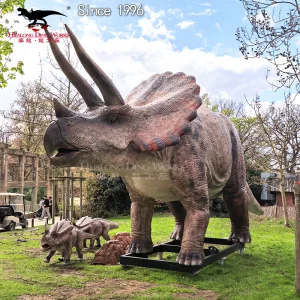
Large Animatronic Triceratops Model
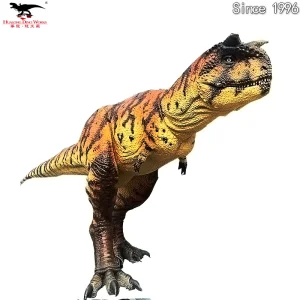
Servo Motor Driven Carnotaurus Model
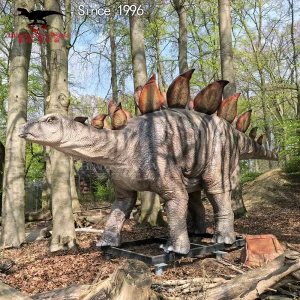
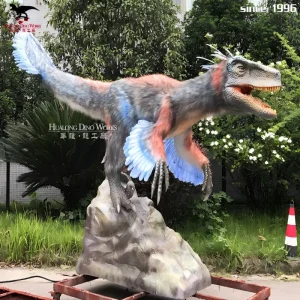
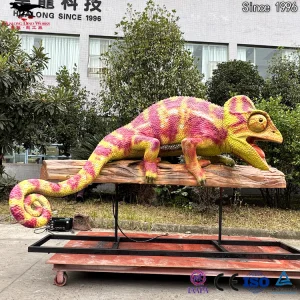
Simulated Giant Chameleon Sculpture
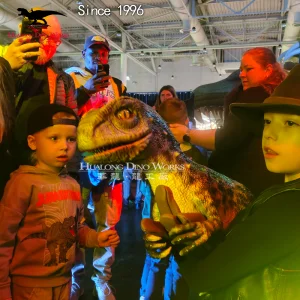
Interactive Stage Dinosaur Hand Puppet
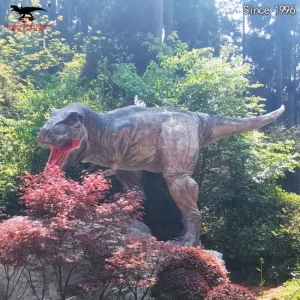
Realistic T-Rex Theme Park Animatronic
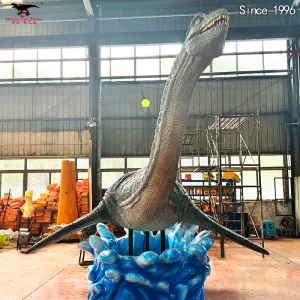
Detachable Skin Texture Anatomical Model
Frequently Asked Technical & Logistics Questions
Direct engineering clarity addressing polymer formulations, international trade logistics, power configurations, and operational maintenance.
What is the specific material difference between fiberglass resin simulation animals and silicone animatronics?
Fiberglass resin models (FRP) utilize an Unsaturated Polyester Resin or Vinyl Ester matrix reinforced with woven E-glass fiber mats. The resulting shell is rigid, self-supporting, high in Barcol hardness, and exceptionally durable against physical wear or vandalism, making it ideal for static landscaping, commercial photo spots, and large exterior landmarks. In contrast, kinetic animatronics incorporate an articulated Q235B structural steel skeleton driven by geared electric motors, wrapped in high-elasticity polyurethane foam and finished with a flexible Room-Temperature Vulcanized (RTV-2) silicone rubber skin. Silicone models can articulate complex organic motions—such as jaw roaring, ocular tracking, respiration, and limb gestures—while maintaining a lifelike, flexible epidermal feel.
How do outdoor resin and animatronic models endure sub-zero temperatures and high UV exposure?
Weather resistance is engineered directly into the chemical formulations. Our exterior gelcoats incorporate Hindered Amine Light Stabilizers (HALS) and nano-titanium dioxide UV blockers that prevent photo-oxidation, chalking, and polymer chain scission in high-sunlight regions (UV Index 10+). For cold climates (down to -25°C), low-temperature flexibilizers are blended into both the elastomer skins and mechanical lubricants to avoid cold-temperature embrittlement. Internal control enclosures carry IP65 to IP67 ingress protection ratings, utilizing silicone-gasketed seals and thermostatic internal heating elements where needed to prevent condensation on drive electronics.
What electrical standards, voltage inputs, and control modes are supported for international projects?
All internal systems are built to match the local grid parameters of the destination country, supporting 110V/120V 60Hz (North America) and 220V/240V 50Hz (Europe, Middle East, Asia). Control architectures can be configured across multiple activation methods: passive infrared (PIR) body sensors for guest-triggered movements, wireless remote control for guided stage performances, continuous timer automation, or centralized DMX512/Modbus show control protocols for integration into complex theme park master control rooms.
How are ultra-large models (exceeding 10 meters) packaged, transported, and assembled overseas?
Models exceeding standard ISO maritime shipping container dimensions (40ft High Cube: 12.03m × 2.35m × 2.69m) are engineered with modular connection joints. Neck assemblies, appendages, and tail sections are detached along concealed muscle seamlines via internal structural steel flange sleeves secured with high-grade bolts. For ocean transit, models are wrapped in protective multi-layer bubble wrap, moisture-barrier films, and secured onto custom steel shipping cradles. For oversized non-disassemblable pieces, Flat Rack (FR) or Open Top (OT) containers are used. Once delivered, our dispatched factory engineers manage crane positioning, joint bolt assembly, electrical harness coupling, and blend the silicone skin seams on site.
What trade terms (Incoterms) and pre-shipment quality inspections does Hualong provide?
We accommodate full international commercial trade terms, including EXW (Ex Works), FOB (Free on Board Shanghai/Shenzhen/Chongqing), CIF (Cost, Insurance & Freight), and turnkey DDP (Delivered Duty Paid), taking complete operational ownership of international ocean freight, customs clearance, and inland delivery. Every manufactured piece completes an exhaustive 24- to 48-hour continuous burn-in diagnostic test before packing. Customers receive full video documentation, mechanical motor thermographic inspections, and third-party inspection sign-offs (SGS/TUV/BV) prior to cargo container sealing.
What regular preventative maintenance is required to achieve a 10-15 year operational lifespan?
Maintenance is straightforward and designed for local facility teams. Kinetic animatronics require bi-monthly lubrication of mechanical joint bearings, gearboxes, and universal drive linkages using high-grade lithium grease. External silicone skins should be cleaned with neutral pH detergents biannually and re-treated with a protective silicone oil or water-based UV conditioning spray. For rigid fiberglass sculptures, an annual application of high-grade automotive or marine wax maintains gloss retention and prevents atmospheric particulate adhesion. We provide comprehensive operation manuals, wiring schematics, and an initial set of spare fuses, sensors, and skin patching repair kits with every shipment.