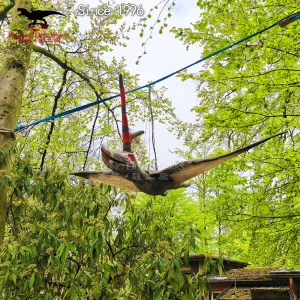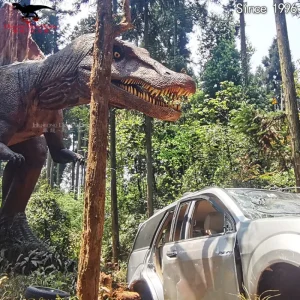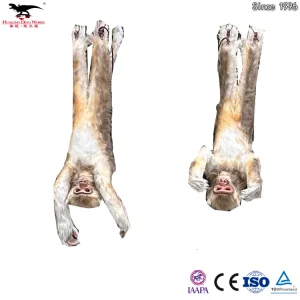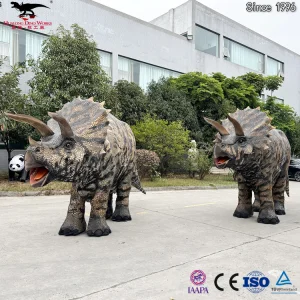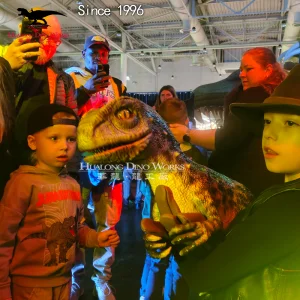
Commercial Product Portfolio
Factory-Direct Architectural & Interactive FRP Exhibits
High-tensile, weathering-grade Fiber-Reinforced Polymer (FRP) sculptures and robotics engineered for permanent outdoor immersion, educational installations, and international entertainment attractions.
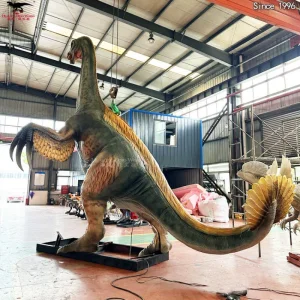
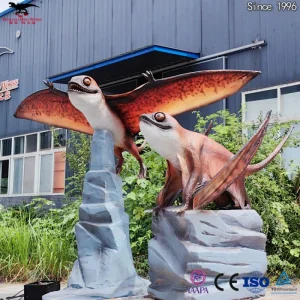
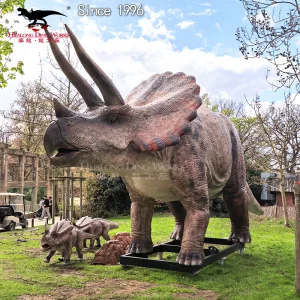

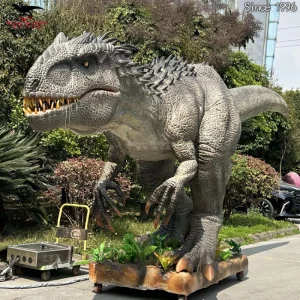
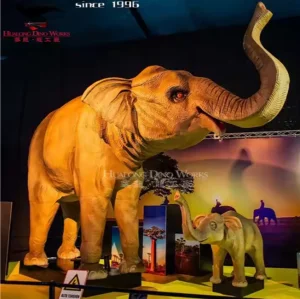
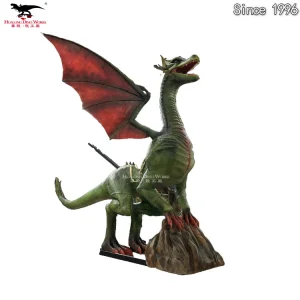
Industrial Hegemony & Supply Chain
The Strategic Edge of Chinese FRP Sculpture Manufacturing
Global themed entertainment giants and urban developers increasingly concentrate procurement within China's specialized composite clusters. Zigong Hualong Science And Technology exemplifies this ecosystem, integrating material sciences, heavy steel internal skeletons, and hyper-realistic surface sculpting under one roof.
30+
Years of Composite Engineering
168+
Senior Technical Specialists
50
Acres of Integrated Production
80+
Export Destination Countries
Ecosystem Synergy & Raw Material Density
Operating within China's industrial zones allows immediate access to aerospace-grade unsaturated polyester resins, chopped strand mat (CSM), multi-axial fiberglass weaves, and specialized fire-retardant gel coats at unmatchable cost efficiencies.
Artisan Mastery Combined with 5-Axis CNC
We blend automated robotic CNC negative milling with master tactile sculpting. While digital tools secure absolute algorithmic precision for geometric landmarks, our veteran artisans preserve intricate organic nuances.
Internal Skeleton Structural Engineering
Unlike simple aesthetic fabricators, our factory calculates wind shear up to Category 12 typhoons, seismic tolerances, and static balance points. Every mega-sculpture houses a certified Q235B hot-dip galvanized internal space frame.
Sector Trends
Next-Gen FRP Sculpture Manufacturing Evolutions
The FRP sculpture and immersive fabrication industry is rapidly moving away from basic static molds toward multidisciplinary architectural systems. Staying competitive requires integrating functional coatings, parametric modeling, and mechatronics.
Flame Retardancy & Eco-Composite Systems
Municipal and indoor venue fire codes require stringent compliance (such as ASTM E84 Class A and EN 13501-1). Modern FRP manufacturers use alumina trihydrate (ATH) fillers and low-VOC vinyl ester resins that prevent flame spread while eliminating hazardous gas discharges during fire incidents.
Interactive Mechatronic & IoT Convergence
Static installations are increasingly integrated with interactive elements. By combining lightweight FRP shells with internal industrial actuators, programmable logic controllers (PLCs), infrared sensors, and dynamic LED illumination, installations evolve into responsive experiential assets.
Automotive-Grade Polyurethane & Fluorocarbon Finishes
Sunlight discoloration is a historical vulnerability of exterior composites. Modern processes rely on multi-tier aliphatic polyurethane coats paired with nano-fluorocarbon clear coats that absorb UV, guaranteeing zero chalking, fading, or peeling over a decade of continuous high-index sun exposure.
Modular Segment Assembly for Logistics Optimization
Shipping 15-meter structures overseas requires advanced division techniques. Engineering models into flanged, transportable modular shells with invisible structural seams enables maximum container volume utilization while preserving fast field bolt-up and local lamination.
Deployment Contexts
Target Deployment Environments for FRP Composite Systems
Engineered FRP sculptures serve distinct functional roles depending on their installation environment. We tailor resin formulations, reinforcement ratios, and surface treatments to match project-specific challenges.
Theme Parks & Immersive Jurassic Habitats
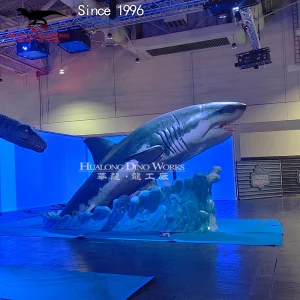
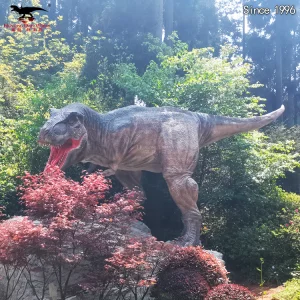
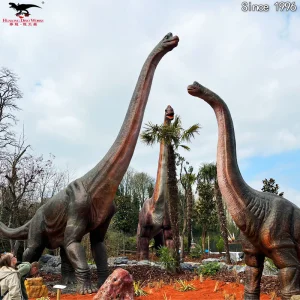
Subjected to thousands of visitor interactions and relentless climate cycles. High impact-resistant composite skins combined with internal steel subframes deliver structural stability for life-size dinosaurs, IP characters, and walkthrough facades.
Commercial Plazas & High-Traffic Atriums
Retail developers require lightweight installations to remain within floor-load limits. FRP offers a high strength-to-weight ratio, allowing massive centerpiece sculptures without reinforcing substructures.
Natural Science Museums & Paleo-Education
Scientific exhibits require accurate skeletal dimensions and lifelike muscle topology. Our models undergo cross-review by paleontology consultants before mold fabrication to ensure educational accuracy.
Night Tourism & Integrated Lantern Festivals
Drawing on Zigong's traditional lantern crafting heritage, our specialized FRP structures can be engineered with internal translucent shells, housing internal LED matrices for nighttime illumination.
Waterfronts & Saline-Alkali Scenic Landscapes
Coastal, marine, and lakeside installations degrade steel and stone through rust and moisture intrusion. FRP provides natural anti-corrosive performance, offering superior long-term stability against salt mist and acid rain.
Engineering Benchmark
Standard Industrial Quality Parameters
Procurement departments require concrete mechanical metrics rather than generic sales descriptions. Every production batch at Hualong Dino Works undergoes rigorous lab testing to ensure project longevity.
| Parameter Metric | Commercial Grade Baseline | Hualong Heavy-Industrial Standard | Validation / Testing Protocol |
|---|---|---|---|
| Barcol Hardness | ≥ 35 | ≥ 50 - 55 | ASTM D2583 / EN 59 |
| Tensile Strength | 80 - 110 MPa | ≥ 165 MPa | ISO 527-4 / ASTM D638 |
| Flexural Modulus | 5.0 - 6.5 GPa | ≥ 8.8 GPa | ISO 178 / ASTM D790 |
| Thermal Operating Range | -10°C to +40°C | -35°C to +65°C Continuous | Cyclic Environmental Chamber |
| Flammability Rating | Standard Combustible | Class B1 / ASTM E84 Class A (On Request) | UL94 / GB 8624-2012 |
| Internal Structure | Raw Carbon Steel Wire/Angle | Q235B Hot-Dip Galvanized / Anti-Rust Primer | GB/T 13912 / Salt Spray 500h+ |
| Paint Finish Adhesion | Class 2 Cross-Hatch | Class 0 (No Flaking or Delamination) | ISO 2409 Cross-Cut Testing |
Full Lifecycle Operations
Macro Project Integration: From Concept to Commissioning
Managing international procurement requires a clear sequence of cross-functional workflows. Our export framework mitigates supply-chain risks, currency fluctuations, and installation friction for enterprise partners.
1. Masterplan & Feasibility
Reviewing CAD drawings, visitor traffic routes, soil bearing capacities, and climate risks to recommend targeted materials and mechanical topologies.
2. Structural & Mold Creation
Precision drafting, robotic hot-wire carving, silicone negative matrix molding, and hand layup of multi-tier structural glass reinforcement.
3. 48-Hour Factory Testing
Pre-assembly, seamless joint verification, hydro-resistance sealing checks, and continuous 48-hour mechanical stress tests prior to release.
4. Global Export & Logistics
Full container loading (FCL), custom steel shipping cradles, DDP/CIF handling, on-site installation, and comprehensive structural documentation.
Procurement Insights
Enterprise Engineering FAQ: FRP Sculptures & Production
Straightforward technical answers to the most common questions raised by project developers, theme park architects, and commercial procurement teams.
What distinguishes commercial FRP composite sculpture from standard cast resin or foam-core fabrication?
FRP (Fiber-Reinforced Polymer) utilizes a matrix of woven multi-axial glass filaments suspended in structural thermoset resins. This creates a high strength-to-weight ratio comparable to aluminum, along with complete moisture resistance and strong impact tolerance. In contrast, standard cast resin is brittle and prone to thermal shock cracking, while foam-core carving (EPS) dents easily and degrades without heavy laminate backing.
How do FRP sculptures withstand outdoor UV exposure, monsoons, and extreme thermal cycling?
Durability relies on high-grade materials and proper coating layering: (1) Isophthalic and vinyl ester gel coats resist moisture and heat; (2) Internal Q235B galvanized steel frames are protected with epoxy primers to prevent rust; (3) Automotive-grade polyurethane paints with UV absorbers prevent chalking and discoloration, ensuring 10-15 years of exterior performance across wide temperature ranges (-35°C to +65°C).
How are mega-scale sculptures (exceeding 10–20 meters) transported and assembled overseas?
Large structures are designed using 3D parametric segmentation to fit into standard 40-foot High Cube (40HQ) shipping containers. The internal steel skeletons use bolt-together flanges, while the exterior FRP shells are split along natural skin folds. On-site, our field engineers bolt the internal frames, chemically bond the seam transitions with resin and glass mat, and blend the paint finish so joints become invisible.
Can FRP sculptures meet strict indoor venue fire safety certifications?
Yes. For airports, convention halls, science centers, and enclosed atriums, we use specialized brominated resins and alumina trihydrate (ATH) fillers. These meet ASTM E84 Class A, UL94 V-0, and EN 13501-1 standards, suppressing open flames and reducing toxic smoke generation.
What are the lead times for custom mold development versus standard existing catalog models?
Using existing company steel tooling and silicone molds typically takes 15–25 working days. Fully custom designs require 35–50 working days, covering 3D parametric design, 1:1 CNC foam pattern milling, clay surface detailing, production mold casting, steel framework welding, resin lamination, and final paint finishing.
What international trade terms and technical support options do you provide?
We support EXW, FOB, CIF, DDU, and DDP terms with sea, rail, and air logistics. Technical support includes full foundation anchor-bolt schematics, wind-load calculation reports, electrical schematics for mechatronics, and on-site engineering crews for final assembly and commissioning worldwide.
Complete Project Showcase
Industrial Custom FRP & Animatronic Sculptures
Explore additional large-scale models, custom creature fabrications, and theme park entrance installations engineered by Zigong Hualong Science And Technology Co., LTD.