High-Spec Turnkey Animatronic Dinosaur Systems
Engineered for high-traffic public amusement parks, science museums, and international entertainment concessions. Compliant with CE, ISO9001, and DIN EN 13814 structural standards.
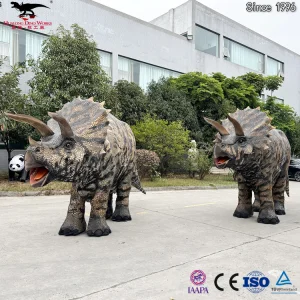
Realistic Simulated Dinosaur Models Outdoor Theme Park Renovation Lifelike Animatronic Sculptures Professional Factory
View Technical Specs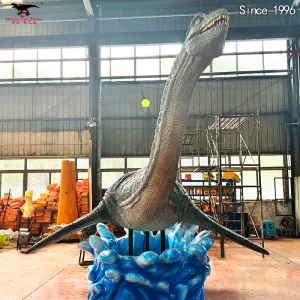
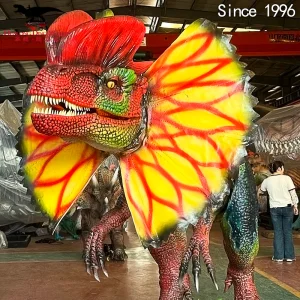
High-Quality Custom Dinosaur Skin Texture Detachable Model Realistic Commercial Display Museum Exhibition Decoration
View Technical Specs
High-Quality Custom Animatronic Dinosaur Models for Museum Outdoor Waterproof Sculpture Scenic Area Theme Planning
View Technical Specs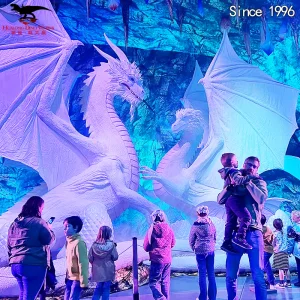
High-Quality Custom White Dragon Model CE Certified Mythical Ice Dragon Fantasy Sculpture for Fantasy Theme Parks
View Technical Specs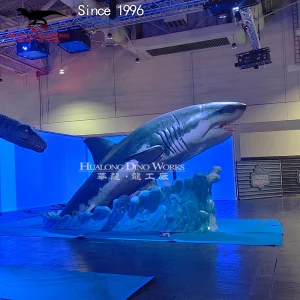
Buy Megalodon Sports Event Crossover Model Giant Shark Football Culture Theme Park Interactive Sculpture Weatherproof
View Technical Specs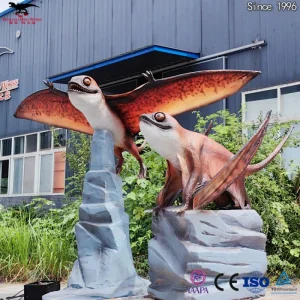
High-Quality Realistic Animatronic Sinomacrops Standing On The Rockery In Jurassic Park Manufacturer Suppliers
View Technical Specs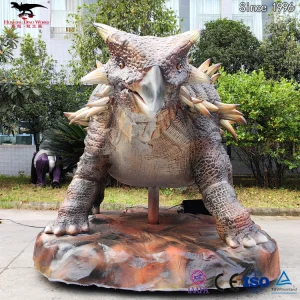
Buy Custom Landscape Sculpture Fabrication Sichuan Ankylosaurus Dinosaur Models CE Certified Realistic for Theme Parks
View Technical Specs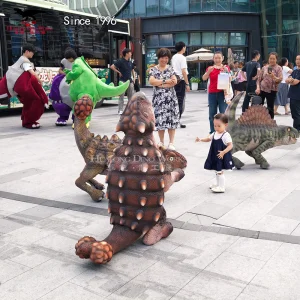
High-Quality Four-Legged Dino Robot Dog Mexico vs USA Football Event Walking Animatronic Mascot for Stadium Attraction
View Technical SpecsThe Global Commercial Landscape of Dinosaur Theme Park Development
Location-Based Entertainment (LBE) investments require deep capital-efficiency models, predictable guest flow engineering, and robust asset longevity across multi-decade operational horizons.
CAPEX Distribution and Yield Dynamics in Modern Prehistoric Parks
The global amusement and themed attraction sector has undergone a profound transformation over the past decade. Dinosaur-themed intellectual properties remain uniquely resilient, standing apart from character-licensed media franchises because prehistoric creatures transcend generational turnover, licensing royalties, and linguistic boundaries. However, commercial investors and municipal project developers frequently face capital expenditure misallocations when initiating park schemes. Historically, over 40% of upfront CAPEX was consumed by peripheral civil architecture, leaving mechatronic exhibits vulnerable to premature mechanical fatigue and synthetic degradation.
Industrial data from top-tier operators across North America, Europe, and East Asia indicates that turnkey dinosaur theme park design requires a synchronized master planning framework. By coordinating mechanical engineering, electrical distribution, and foundational civil works directly at the factory fabrication level, institutional park developers achieve a 22% reduction in overall site integration costs and shorten time-to-market by an average of 4.5 months. Total cost of ownership (TCO) models demonstrate that investing in high-density closed-cell elastomers, brushless digital servomotors, and hot-dip galvanized structural chassis lowers annual maintenance OPEX from 14.8% of capital value down to less than 3.6% over a ten-year operational lifecycle.
Throughput Optimization
Strategic positioning of primary animatronics (such as 18-meter Tyrannosaurus rex or 25-meter Diplodocus specimens) regulates crowd kinetic velocity, eliminating pedestrian bottlenecks along core scenic arteries.
- Dynamic pulsed show sequences (3 to 6-min cycles)
- Elimination of queue dwell frustration
- Optimized secondary spend line-of-sight
Royalty-Free Longevity
Unlike third-party entertainment licenses requiring 7% to 15% gross ticketing royalties, paleontology-based themes are open IP assets with infinite cultural staying power and universal intergenerational draw.
- Zero licensing renewal overhead
- Total creative freedom for brand merchandising
- Educational accreditation and school group appeal
Secondary Revenue Amplification
Integrating animatronic rideable units, interactive fossil excavation pits, and robotic stage performers yields substantial ancillary monetization, outperforming general admission ticket yields.
- High-margin pay-per-ride interactive units
- Branded themed catering (F&B) dwell times
- Immersive photo and retail souvenir hubs
| Evaluation Parameter | Standard Decorative Sculptures | Legacy Hydraulic / Pneumatic Units | Hualong Industrial Mechatronic Systems |
|---|---|---|---|
| Mean Time Between Failures (MTBF) | N/A (Static) | 1,200 Operating Hours | 8,500+ Operating Hours |
| Daily Operating Energy Demand | 0 kWh | 48 kWh / Unit (Compressor/Pumps) | 6.2 kWh / Unit (Brushless Digital) |
| Skin Tensile Elasticity & UV Rating | Rigid Resin (Prone to Crazing) | Industrial Latex (2-Year Degradation) | High-Tear Platinum Silicone (ASTM G154 10Y) |
| Kinematic Control & Telemetry | Static Position | Binary Valves (Jerky Motion) | Multi-Axis CAN-Bus Dynamic Synchronization |
| Annual Maintenance Burden (% CAPEX) | 2.1% (Surface Repainting) | 12.5% – 18.0% (Fluid Leaks & Seals) | Under 3.2% (Sealed Bearing Architecture) |
Evolutionary Mechatronics: From Cam Mechanisms to Digital Twin Systems
How four decades of Zigong engineering transformed mechanical puppetry into cyber-physical animatronic robotics capable of continuous unassisted operation.
Structural Kinematics and Multi-Layer Silicone Elastomer Synthesis
Early animatronic fabrication relied heavily on basic air pistons, open mechanical levers, and sponge matrices coated in natural vulcanized rubber. These early assemblies exhibited major operational flaws: extreme vulnerability to solar UV embrittlement, hydraulic fluid contamination, and rigid, unnatural movement patterns that failed to captivate audiences. Modern manufacturing at Hualong Dino Works has rewritten these standards by merging industrial robotics with precise anatomical paleobiology.
The manufacturing process begins with structural steel skeletal chassis engineered under Finite Element Analysis (FEA) to withstand high wind shear (tested up to Beaufort Scale 12/Typhoon conditions) and continuous dynamic torque cycles. Joints are fitted with high-efficiency copper-core reduction gearboxes driven by digitally modulated brushless DC servomotors. Musculature is sculpted from high-density, open-cell flexible polyurethane with anisotropic directional memory, allowing authentic muscular expansion and contraction during breathing and locomotion. The skin layer incorporates a structural sandwich matrix: an inner tear-resistant filament web coated with multi-pass liquid platinum-cure silicone elastomer, hand-textured by master sculptors and cross-linked with aliphatic pigments impervious to sun bleaching, water penetration, and atmospheric ozone degradation.
Digital Twin Simulation
Before cutting raw steel, every park exhibit undergoes 3D CAD stress simulation and kinematic range analysis to verify motor clearances, center of gravity shift, and foundation anchor bolt loads.
- Zero field-collision during installation
- Dynamic weight displacement tracking
- Optimized power consumption mapping
IoT Predictive Telemetry
Integrated micro-controllers continuously log motor current spikes, internal bearing temperatures, and duty-cycle counts, broadcasting early warning indicators before any physical breakdown occurs.
- Remote diagnostic factory connection
- Preventative lubrication alerts
- Automated overload motor shutoff circuits
Biomimetic Movement Profiles
Replacing abrupt on/off movements with S-curve acceleration algorithms. Mouth, eye, cervical vertebrae, respiratory chest, and tail articulation mimic natural biological inertia.
- Synchronized multi-channel audio synthesis
- Smooth mechanical deceleration dampening
- Infrared guest proximity responsive pacing
Environmental Engineering: Localized Scenario Architectures
A dinosaur theme park operating in a Scandinavian winter requires fundamentally different engineering than an attraction installed in the Arabian desert or a coastal marine park.
Extreme Freeze & Snow (-40°C)
Equipped with internal low-wattage self-regulating heating traces, low-temperature synthetic polyalphaolefin (PAO) gear lubricants, and silicone elastomer formulations cross-linked to prevent glass transition embrittlement in sub-zero operational climates.
High-Saline Humid Tropics
Features C5-M marine-grade epoxy anti-corrosion barrier coatings on structural frames, 316-grade stainless steel hardware fasteners, fully hermetic IP67-rated electrical junction bays, and anti-fungal biocides formulated into exterior silicone matrices.
High-UV Desert Plains (+50°C)
Employs dual forced-air cooling blowers within motor enclosures, labyrinth sand-seal covers over all joint articulations, and nano-titanium dioxide reflective pigments that reject high UV radiation to prevent thermal skin breakdown.
High-Density Retail Centers
Features ultra-silent helical gearboxes running below 48 dB(A), flame-retardant structural foams meeting UL94-V0 and DIN 4102 B1 standards, pinch-point protection geometry, and zero-emission volatile organic compound (Low-VOC) certified finishing pigments.
Macro Turnkey Execution: From Green Field to Opening Day
A rigorous five-stage engineering governance protocol ensuring schedule certainty, structural safety, and complete turn-key park delivery.
Master Planning & Topography
Geotechnical site survey evaluation, pedestrian traffic simulation, sightline planning, and scenic zoning mapping tailored to client business models.
Paleontological CAD Design
Scientific anatomical modeling cross-referenced with academic paleontological data, paired with full mechanical skeleton kinematics and FEA load validation.
Precision Manufacturing
Certified steel chassis welding under AWS D1.1 guidelines, electrical control assembly, high-density muscle carving, and artisan silicone skin application.
Site Civil Integration
Reinforced concrete foundation footing design, sub-grade wiring/drainage interfaces, camouflaged landscaping, and structural anchor bolt setting.
Testing & Commissioning
48-hour continuous run testing, acoustic balancing, sensor calibration, local third-party safety inspection, and complete client maintenance staff training.
Comprehensive Regulatory Compliance: CE, ASTM F2291, and EN 13814
Procuring commercial-grade animatronics involves complex municipal safety and mechanical compliance verifications. An animatronic installation within a public venue is legally classified as an amusement ride or mechanical show installation in most jurisdictions. Failure to comply with regional engineering directives can lead to permitting denials, project delays, or insurer policy cancellations.
Zigong Hualong Science and Technology ensures every project complies with global safety directives. Our electrical architectures adhere strictly to the European Union Low Voltage Directive 2014/35/EU and Electromagnetic Compatibility (EMC) Directive 2014/30/EU, carrying certified CE markings. For park operators throughout the Americas, our structural steel frameworks and anchor bolt designs can be engineered to ASTM F2291 (Standard Practice for Design of Amusement Rides and Devices) and ASTM F1193 standards, incorporating redundant fail-safe limit switches, thermal circuit breakers, and emergency shutdown integration.
Next-Generation Technologies Shaping Dinosaur Attractions Through 2030
The boundary between static theme parks and interactive cybernetic worlds is dissolving. Emerging technologies are setting new standards for guest engagement.
AI Computer Vision Interaction
By integrating neural-network vision sensors into ocular sockets, animatronics recognize guest presence, track facial direction, and initiate responsive behavioral routines.
- Dynamic predator eye-tracking
- Aggressive roar response to large crowds
- Passive maternal nesting behavior with small children
Lantern Hybrid Day-to-Night Yield
Merging traditional Zigong lantern craftsmanship with heavy animatronics enables dual daytime and nighttime ticket sales, boosting park operating margins by 60%.
- Internal programmable LED illumination
- Translucent bio-luminescent skin details
- Coordinated nightly sound and light show sequencing
Sustainable Eco-Polymers
Next-generation green attractions demand sustainable materials. Our research lab is pioneering plant-derived biopolyols and low-carbon recyclable elastomer skins.
- 35% reduction in production carbon footprint
- Heavy-metal-free exterior pigments
- Closed-loop recycling for aluminum skeletal parts
Frequently Asked Questions by Theme Park Developers & Buyers
Clear, engineering-driven answers to the most common questions raised during international park procurement.
Interactive Attractions, Costumes & Signature Centerpieces
Expand visitor engagement with interactive stage performance suits, museum exhibition fossil replicas, and life-size kinetic predators.
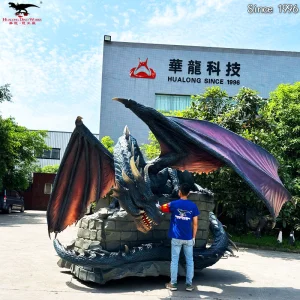
High-Quality High-Tech Animatronic Dinosaur for Museum Exhibition Custom Theme Sculpture Design Bulk Order
View Technical Specs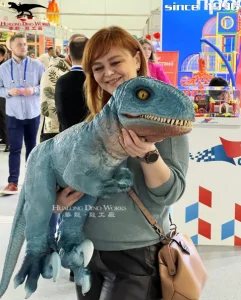
High-Quality Wholesale Dinosaur Hand Puppets Realistic Animatronic Design with Movable Jaw Roaring Sound
View Technical Specs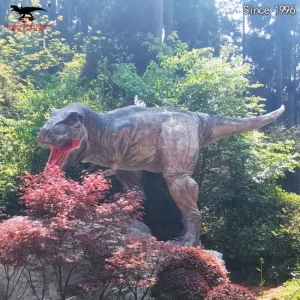
Buy Animatronic Realistic T-Rex Dinosaur In Theme Park Supplier Lifelike Sound and Movement Synchronization
View Technical Specs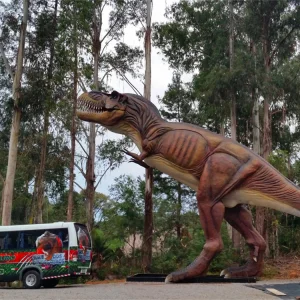
Buy Lifelike Prehistoric Creature Reproductions Realistic Animatronic Dinosaur for Jurassic Replicas Manufacturers
View Technical Specs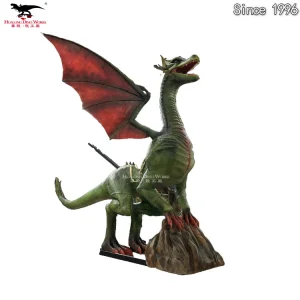
Buy Animatronic Dragon Statue Outdoor Decoration with Roaring Sound Flashing LED Eyes Weatherproof Silicone Skin
View Technical Specs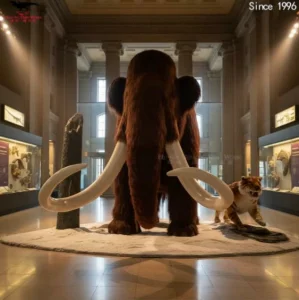
High-Quality Animatronic Mammoth Model Hualong Technology for Park Zoo Ice Age Themed Attraction Manufacturer
View Technical Specs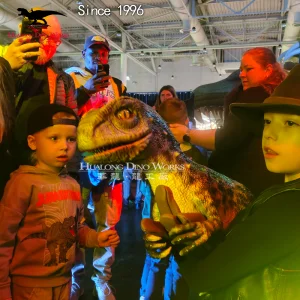
Buy Animatronic Dinosaur Hand Puppet Hualong Technology for Stage Show Interactive Performance Suppliers
View Technical Specs