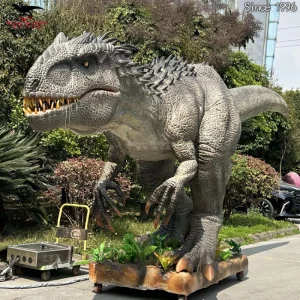
Flagship Animatronic Dinosaur & Creature Solutions
Precision-engineered robotic models certified for theme parks, natural history centers, immersive exhibits, and retail destinations worldwide. Factory-direct procurement with full CE compliance.
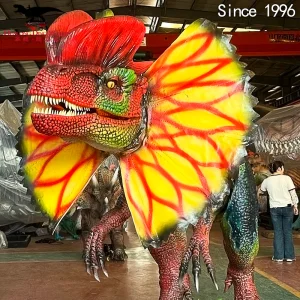
Buy Realistic Simulated Dinosaur Models Outdoor Theme Park Renovation Lifelike Animatronic Sculptures Professional Factory (CE Certified) Manufacturer, Suppliers
View Specifications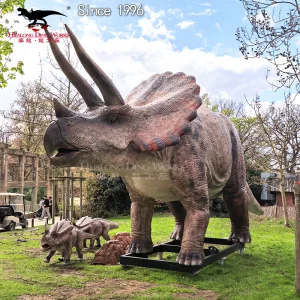
Buy Animatronic Triceratops Model Hualong Technology for Theme Park Dinosaur Exhibition Supplier, Suppliers
View Specifications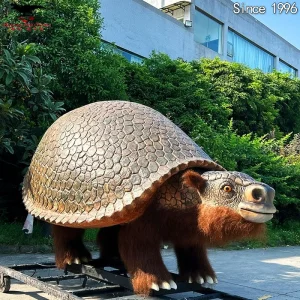
Buy Animatronic Glyptodon Hualong Technology for Natural History Display Simulated Animal Model Supplier, Suppliers
View Specifications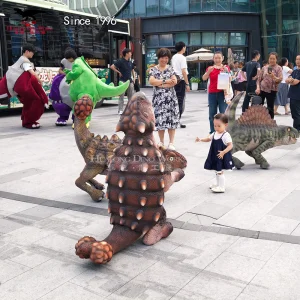
High-Quality Intelligent Walking Dinosaur Baby Four-Legged Dino Robot Dog Walking Animatronic Mascot for Stadium Attraction Manufacturers, Supplier
View Specifications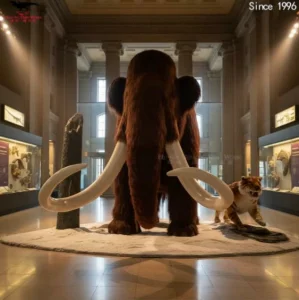
High-Quality Animatronic Mammoth Model Hualong Technology for Park Zoo Ice Age Themed Attraction Manufacturer, Suppliers
View Specifications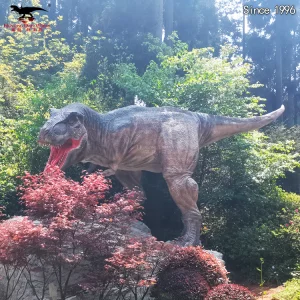
Buy Zigong Sichuan Custom Lifelike Dinosaur Model Outdoor Science Waterproof Simulated Landscape Design(CE Certified) Manufacturer, Factories
View Specifications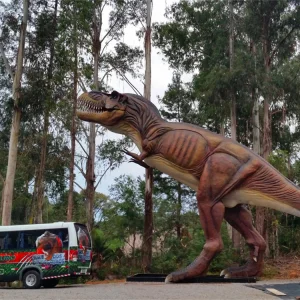
Buy Lifelike Prehistoric Creature Reproductions Realistic Animatronic Dinosaur for Jurassic Replicas Manufacturers, Factory
View Specifications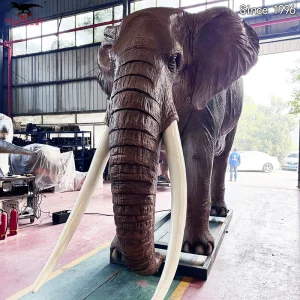
Buy Custom Animal Animatronic Model CE Certified Electrical Robotic Animal for Fantasy Theme Parks & Outdoor Display Lightweight High-Quality Foam Customization Manufacturers, Factories
View SpecificationsThe Economics of Animatronics: Total Cost of Ownership (TCO)
Evaluating upfront Capital Expenditure (CapEx) against long-term Operational Expenditure (OpEx). Why initial unit purchase price accounts for only 42% of a 7-year attraction lifecycle cost.
Beyond Sticker Price: The True Lifecycle Expenditure
For theme park general managers, museum operations executives, and commercial attraction developers, the procurement of animatronic exhibits has historically been clouded by opaque pricing structures. A low initial factory quote often obscures downstream liabilities: high motor failure frequencies, silicone skin delamination under UV radiation, proprietary non-interchangeable control boards, and exorbitant overseas field technician charges.
A rigorous Total Cost of Ownership (TCO) analysis demonstrates that a direct factory partner utilizing standardized industrial components delivers up to 38% in net lifecycle savings over a standard five-year deployment horizon. Factory-direct engineering ensures direct access to modular components, industrial-grade IP65 electrical enclosures, and open-architecture microcontrollers that eliminate vendor lock-in.
- CapEx (Capital Expenditure): Raw materials, kinematic frame fabrication, skin sculpting, drive motor grade, controller architecture, and FAT (Factory Acceptance Testing).
- Logistics & Customs Duties: CBM optimization, container load engineering, HS Code classification (typically 9508.90 or 9023.00), and port drayage.
- Site Commissioning & Civil Works: Structural anchor bolts, electrical load routing (110V/220V/380V), pneumatic compressor lines, and ambient drainage.
- OpEx (Operational Expenditure): Preventative maintenance, lubrication cycles, seal replacements, cosmetic skin touch-ups, and standby power draw.
5-Year Lifecycle Cost Distribution
Empirical data aggregated from 120+ international theme park installations operating outdoor simulated prehistoric attractions:
Quantitative Cost Drivers in Animatronic Dinosaur Fabrication
| Specification Parameter | Commercial Grade (Low Cost) | Professional Park Standard | Ultra-Realistic Museum Standard | Cost Variance Factor |
|---|---|---|---|---|
| Internal Steel Skeletal Frame | Recycled scrap steel, non-galvanized | National Standard Q235 galvanized carbon steel | Custom structural tubing with stress-relief heat treatment | +25% to +45% |
| Mechanical Drive System | Standard brushed DC gear motors | Heavy-duty brushless servomotors with harmonic reducers | Closed-loop digital servos + proportional pneumatic cylinders | +40% to +90% |
| Muscle & Flesh Substrate | Low-density polyether foam (20D) | High-resilience open-cell foam (35D-45D) | Flame-retardant sculpted micro-cellular composite foam | +15% to +30% |
| Epidermal Membrane (Skin) | Single-layer industrial room-temp vulcanizing silicone | Multi-layer platinum-cure silicone + embedded fiberglass mesh | Bio-mimetic platinum elastomer with micro-wrinkle detailing | +35% to +75% |
| Degrees of Freedom (DoF) | 3-4 basic axes (Mouth, Head Y, Tail) | 6-8 dynamic axes (Breathing, Eyes, Head X/Y, Forelimbs) | 12-16 synchronous axes (Organic multi-segment spinal undulation) | +50% to +140% |
| Control & Automation | Basic PIR sensor + relay loop | PLC-based solid state controller + SD sound sync | DMX512 integrated show control + AI visual trigger recognition | +30% to +65% |
The Zigong Supply Chain Advantage: Why China Leads the World
Over 85% of all animatronic prehistoric creatures operating globally originate from a single industrial cluster: Zigong, Sichuan Province. Here is the operational science behind this geographical monopoly.
Hyper-Localized Raw Material Supply
Within a 15-kilometer radius in Zigong's high-tech industrial parks, factories access specialized steel mills, polymer chemical formulators, dedicated gearbox manufacturers, and custom digital sound card fabricators. This concentrated supply chain eliminates domestic inter-provincial shipping delays and reduces procurement overhead by 22% compared to disparate assembly facilities elsewhere.
Generational Paleontological Artisanship
Home to the Dashanpu dinosaur fossil excavations and the Zigong Dinosaur Museum, the region possesses a unique labor pool. Sculptors and mechanical fabricators have specialized in dinosaur anatomy across multiple generations. Muscle tension curves, skin folds, and skull contours are executed with scientific fidelity under anatomical references derived directly from authentic paleontological discoveries.
Economies of Scale & Cost Compression
Zigong's animatronics factories produce tens of thousands of units annually. Volume purchasing of national standard structural steel, platinum vulcanizing silicone, and customized high-torque brushless motors allows established factories like Hualong to offer international clients direct-from-source pricing that Western specialty effects studios cannot match without charging 300% to 500% premiums.
Localization Support, Global Compliance & Field Assurance
International commercial entertainment venues demand strict regulatory compliance. Cutting corners on electrical certification or fire retardancy can halt amusement park grand openings.
International Safety Certifications
All structural, electrical, and control units conform to EU Machinery Directive (2006/42/EC), Low Voltage Directive (2014/35/EU), and Electromagnetic Compatibility (2014/30/EU). Verified by SGS, TUV, and BV testing authorities.
Fire Retardancy & Toxicity Standards
High-density internal foams and external silicone skins are blended with halogen-free flame retardants. Materials meet DIN 4102 B1 and NFPA 701 specifications for safe indoor mall and museum atrium deployments.
Localized Grid & Environmental Tuning
Power architectures are natively configured for destination power grids: 110V 60Hz (North America), 220-240V 50Hz (Europe/Asia), or 380V three-phase for monumental sauropods, complete with localized IP67 outdoor junction cabinets.
Global Field Installation Teams
Experienced structural engineers, mechanical assemblers, and scenic artists deploy globally to manage heavy crane rigging, concrete footing anchoring, signal calibration, and local maintenance personnel training.
Strategic B2B Sourcing Protocol: How Enterprise Buyers Audit Factories
A step-by-step framework utilized by Fortune 500 theme park operators and international touring exhibition groups to qualify suppliers and prevent substandard deliveries.
1. Precise Mechanical RFQ Formulation
Never request quotes based solely on length or generic species names. Specify steel grade (e.g., Q235B minimum 2.5mm wall thickness), motor brand (brushless DC with planetary reducers), sound decibel limits, ambient operating temperature windows (-25°C to +50°C), and explicit degrees of freedom (DoF) per joint.
2. Mandatory 48-Hour Continuous FAT
Before authorizing ocean container stuffing, enforce a formal Factory Acceptance Test (FAT). The factory must run every animatronic model continuously for 48 uninterrupted hours under full cycle load. Thermal imaging checks on motors, current draw stabilization, and silicone friction points are logged and certified.
3. Modular Demounting & CBM Optimization
International freight costs can balloon project budgets if shipping geometry is neglected. Tier-1 manufacturers engineer detachable necks, tails, and limbs with internal quick-connect wiring harnesses and flange-bolted structural joints, ensuring standard 40-foot High Cube (40HC) container packing efficiency.
The Next Decade: AI Vision, Micro-Sensory Drives & Telematics
Animatronics is undergoing a technological revolution. Static pre-programmed loops are giving way to responsive artificial intelligence, precision digital servos, and cloud-connected remote health monitoring.
Computer Vision & Interactive AI Triggers
Traditional infrared beam sensors are being replaced by stereoscopic optical depth cameras paired with edge AI processors. Animatronic predators can now detect visitor proximity, identify gaze direction, track crowd density, and trigger context-aware aggressive or inquisitive behavioral postures in real time.
Bus-Driven Digital Servo Kinematics
Shifting from legacy analog relays to CAN bus and RS485 serial communication networks allows sub-millimeter positional control. This eliminates unnatural jerky motor stops, enabling micro-tremors in dinosaur throat folds, subtle nostril flaring, and organic ocular saccades that mimic living biological entities.
IoT Telematics & Predictive Maintenance
Integrated telemetry sensors log motor winding temperatures, gear vibration harmonics, skin flex cycles, and power consumption metrics to secure cloud dashboards. Maintenance supervisors receive automated alerts prior to bearing seizures or electrical anomalies, eliminating unscheduled park downtime.
Target Application Scenarios & Empirical ROI Frameworks
Detailed performance specifications matched to revenue models across theme parks, natural history museums, retail experiential hubs, and municipal light festivals.
Theme & Amusement Parks
Operational Requirements: 10-14 hours continuous daily duty cycle, weather-sealed IP66 electronics, anti-vandalism skin formulas, high audio throughput.
Typical Payback Horizon: 4 to 8 months via direct ticketing premiums, fast-pass lane additions, and themed merchandise sales.
Museums & Science Centers
Operational Requirements: Rigorous anatomical accuracy, ultra-quiet brushless motors (<42dB), interactive educational push-button/touch-panel synchronization.
Typical Payback Horizon: 6 to 12 months funded via temporary touring exhibit admission surcharges and STEM school sponsorships.
Commercial Retail Centers
Operational Requirements: NFPA 701 fire retardancy certification, zero exhaust or hydraulic oil risks, low-profile footprint, photo-op engagement design.
Typical Payback Horizon: Indirect capital justification: drives 20-35% increases in atrium dwell time, retail footfall, and F&B anchor tenant revenues.
Nocturnal Light Festivals
Operational Requirements: Synergistic pairing of internal LED matrix illumination and synchronized animatronic roars, robust cold/humidity resistance.
Typical Payback Horizon: 60 to 90 days across seasonal holiday events, capturing high-yield night-tourism revenues and ticket sales.
Enterprise Procurement FAQ: Technical & Contractual Inquiries
Direct answers to the most frequent technical, logistical, and warranty inquiries submitted by commercial procurement managers.
What are the exact material specifications for outdoor weatherproofing in extreme climates?
How does the cost of animatronic dinosaurs scale with size and degrees of freedom (DoF)?
What international trade terms (Incoterms) and payment structures are accepted?
What is the mean time between failures (MTBF) and routine maintenance schedule?
Can custom intellectual property (IP), fantasy creatures, or robotic mascots be produced?
How are spare parts, emergency replacements, and after-sales support managed globally?
What are the site foundation, electrical, and civil preparation prerequisites?
How does the Factory Acceptance Test (FAT) protocol protect overseas buyers?
Specialty Dinosaur Exhibits, Puppetry & Dynamic Displays
Explore advanced servo-driven predators, giant prehistoric replicas, interactive retail puppets, and scenic master planning models manufactured to exacting international standards.
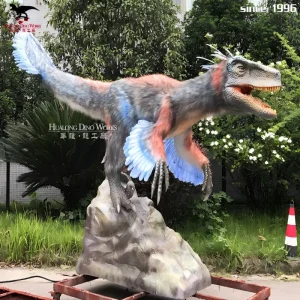
High-Quality Life Size Custom Realistic Animatronic Dinosaur Pyroraptor Models Diorama for Outdoor Park&Indoor with CE Certificate Manufacturer, Supplier
View Specifications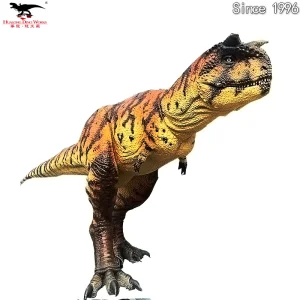
Buy Animatronic Dinosaur Exhibit Servo Motor Driven Carnotaurus Dinosaur Model - for Theme Park, Museum, Shopping Window Display and Decoration - Custom Animatronic Dinosaur Factory, Factories
View Specifications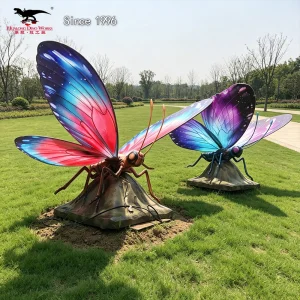
Buy Lifelike Animatronic Insect Model Hualong Technology for Park Scenic Spot Decorative Display Manufacturer, Factory
View Specifications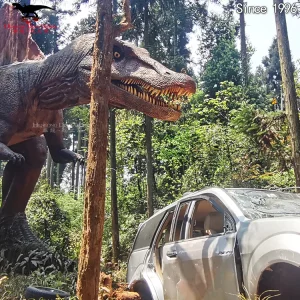
High-Quality Custom Spinosaurus Model High-Quality Foam Weatherproof&Moisture-Proof Largest Carnivorous Dinosaur Theme Park Outdoor Exhibit Factory Direct Manufacturer, Factories
View Specifications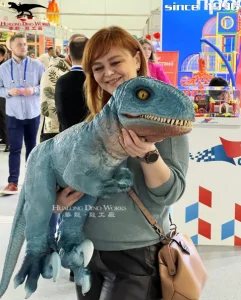
High-Quality Wholesale Dinosaur Hand Puppets - Realistic Animatronic Design with Movable Jaw & Roaring Sound, Perfect for Kids Educational Play/Themed Shows (OEM Available) Manufacturers, Suppliers
View Specifications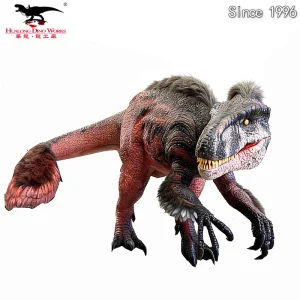
High-Quality Custom Animatronic Dinosaur Models for Museum Custom& Museum Outdoor Waterproof Sculpture Scenic Area Theme Planning and Design Suppliers, Factories
View Specifications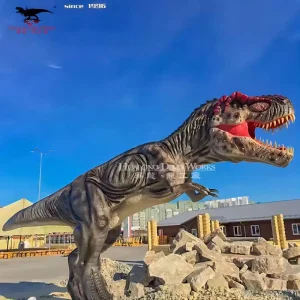
High-Quality Animatronic T-Rex Aggressive Dinosaur in Amusement Park Manufacturers, Factories
View Specifications