
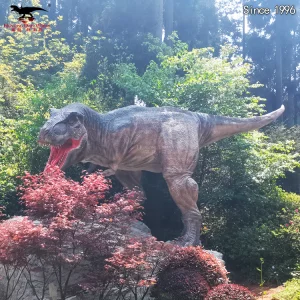
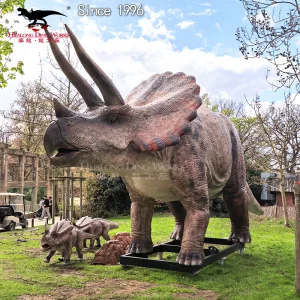
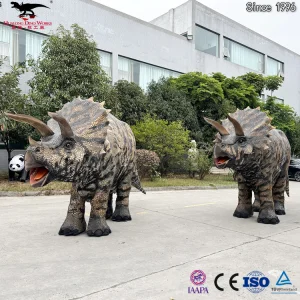
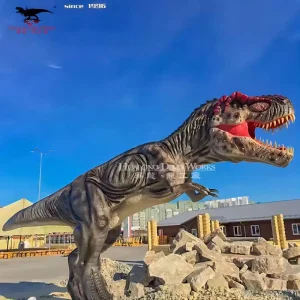
High-Quality T-Rex Dino Robot Dinosaur Model Theme Park Equipment Animatronic Model for Stadium Attraction Factory, Factories
View Technical Specs
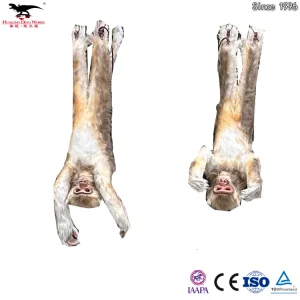
Featured robotic specimens built with commercial-grade chassis, high-density cellular muscle sculpts, and vulcanized platinum-cure silicone skins engineered for heavy guest traffic.
An exhaustive analysis of capital expenditure models, supply chain shifts, and reliability requirements across the worldwide themed attraction ecosystem.
The global market for large-scale animatronic dinosaur models and simulated prehistoric exhibits has shifted from occasional specialty museum curiosities into a high-throughput, multi-billion-dollar attraction sector. Across Europe, North America, the Asia-Pacific basin, and the Gulf Cooperation Council (GCC) territories, experiential tourism operators are prioritizing hyper-realistic, high-throughput attractions that drive organic social reach and maximize footfall dwell time. Whether commissioning a 20-meter mechanical Brachiosaurus or an entire turn-key Jurassic walk-through attraction, global B2B procurement managers, landscape architects, and municipal exhibition developers encounter identical challenges: structural longevity under harsh climatic cycles, precision biomimetic movement curves, and aggressive project commissioning schedules.
Historically, commercial animatronics suffered from brittle hydraulic layouts, pneumatic leaks, and UV-degraded latex outer membranes that required frequent rebuilds within six to twelve months of outdoor exposure. Modern commercial procurement mandates industrial-grade mechatronics: brushless direct-drive or planetary reduction servo motors, high-tensile structural steel frames designed via Finite Element Analysis (FEA), high-resilience fire-retardant polyurethane core muscle groups, and multi-layered, vulcanized platinum-cure silicone rubbers. These material innovations deliver up to 5 to 8 years of continuous outdoor operating life even in severe desert heat, tropical humidity, or sub-zero winter freeze-thaw cycles.
When engineering bulk purchase orders for theme parks, commercial plazas, and natural history centers, volume production efficiency dictates commercial viability. The capacity to orchestrate concurrent manufacturing of 30 to 80 bespoke life-size robotic figures simultaneously—without sacrificing individual anatomical sculpting accuracy—distinguishes basic prop workshops from genuine industrial manufacturing plants.
Factory-direct procurement bypasses intermediary distribution markups, reducing per-unit asset acquisition capital expenses by 35% to 50% compared to Western assembly plants, enabling scalable attraction footprint expansions.
Designed around ISO9001 and CE machinery safety compliance directives (EN 13814 fairground amusement ride standard), integrating redundant limit switches, dual-bearing pivot linkages, and thermal-overload-protected motor controllers.
Multi-channel digital signal processor (DSP) logic systems allow synchronization of infrared guest tracking, directional digital audio, proportional respiratory ribcage inflation, and dynamic scent or mist ejectors.
Why more than four out of five animatronic models globally originate from Sichuan's prehistoric manufacturing corridor.
In modern industrial manufacturing, clustering creates self-reinforcing supply chain economies of scale. Zigong, Sichuan, holds a unique geopolitical and geological position: home to the Dashanpu Dinosaur Fossil site—one of the world's dense dinosaur bonebeds—the region has spent four decades cultivating a specialized artisan and mechanical workforce. Combining historic lantern-making metal framework techniques with modern robotic actuation and high-grade chemical polymer sculpting, the Zigong cluster provides unmatched turnaround agility and component sourcing depth.
A Western novelty workshop typically sources motors from separate suppliers, subcontracts welding to third-party metal fabricators, and relies on generic foam carving, yielding extended 16 to 24-week delivery horizons. In contrast, Zigong Hualong Science And Technology Co., LTD. maintains an integrated 50-acre production footprint supported by over 168 resident engineers, master sculptors, and certified electrical technicians. From CNC raw-pipe laser cutting to in-house silicone color tinting and customized audio frequency synthesis, 98% of all assembly workflows occur on site.
| Evaluation Parameter | Conventional Western Assembler | Fragmented Generic Workshop | Zigong Hualong Integrated Base |
|---|---|---|---|
| Mechanical Chassis Material | Standard hollow tubing; sporadic rust-proofing | Recycled scrap steel, non-galvanized | GB/T 700 standard Q235B structural carbon steel + 3-coat marine epoxy barrier |
| Actuation Mechanisms | Pneumatic pistons or basic AC hobby motors | Low-torque brushed DC motors without thermal cutoffs | High-torque copper-wound brushless DC servo gearmotors with IP65 gearboxes |
| Bionic Skin Substrate | Standard latex / polyurethane sponge | Low-density packing foam + single-layer siliconized sealant | High-density cell memory sponge (35-45kg/m³) + multi-layer fiberglass wire mesh + platinum silicone |
| Pre-Shipment Inspection | Visual spot check, limited runtime | Pack-and-ship without continuous stress cycle | Mandatory 24 to 48-hour uninterrupted cyclic stress testing under simulated load |
| Lead Time for 20+ Unit Bulk Order | 16 – 26 Weeks | Unpredictable (14 – 20 Weeks) | 4 – 7 Weeks via multi-stage parallel manufacturing lines |
CE Directives (LVD/EMC), ISO9001:2015 quality assurance, BV, TUV, and SGS verified testing documentation packaged for straightforward municipal permitting.
CAD-to-scale mockups transitioned into functional, full-scale working models within 10 days; parallel tooling allows simultaneous handling of 60+ specimens.
Factory-trained mechanical and electrical installation squads deployed directly to customer sites across North America, Europe, the Middle East, and Asia.
Procuring straight from the primary manufacturing source eliminates tier-2 broker commissions and inflated distributor markups.
Engineered to adapt to distinct operational profiles, weather exposure ratings, and guest safety regulations worldwide.
No two installation footprints present identical operational parameters. A theme park in Florida or Southeast Asia battles 95% relative humidity and torrential precipitation; a desert exhibition in Riyadh or Dubai confronts abrasive fine particulate matter and solar surface temperatures exceeding 65°C; an upscale retail galleria in Frankfurt or Tokyo demands nearly silent mechanics with zero toxic volatile emissions (VOCs) and tight indoor clearances.
Heavy-duty outdoor animatronics engineered for continuous operation through heavy rains, high winds, and intense UV exposure. Models feature concealed water drain holes, sealed electronics enclosures, and structural ground anchors engineered for foundation stability.
Anatomically validated skeletal and muscular proportions executed under paleontological reference. Silent harmonic reducers eliminate mechanical grinding sounds, allowing accompanying educational acoustic narration to remain crisp and intelligible.
High-dwell-time indoor centerpieces optimized for interactive photo captures and family engagement. Outfitted with child-safe motion limiting switches, non-combustible foam substructures, and low-voltage 24V bionic drive assemblies.
Zigong's signature crossover discipline: pairing interior LED framework illumination with full fluid kinetic movement, extending operating hours into profitable evening entertainment cycles.
Camouflaged control boxes, solar-ready low-draw inverters, and passive infrared proximity triggers that awaken animatronic creatures seamlessly as trail walkers approach.
Modularized quick-disconnect chassis, reinforced flight-casing integration, and ultra-durable skin formulas capable of surviving repeated weekly freight logistics and rapid strike schedules.
Bridging the gap between static sculptures and responsive, AI-integrated biomimetic robotic entities.
The animatronics industry is moving rapidly beyond static loop playback timers. Commercial operators no longer settle for a dinosaur that mechanically repeats an unvarying 30-second loop. The convergence of edge AI computer vision, IoT continuous telemetry, and advanced elastomer materials chemistry is establishing new operational benchmarks across the themed attraction sector.
1. Edge AI and Vision-Responsive Interaction: Next-generation animatronic specimens incorporate concealed optical sensor arrays within pupils or snout cavities. Embedded machine learning models detect guest velocity, gestures, and cluster size, dynamically altering the creature's aggression curves, eye contact tracking, and roar intensity. When a child approaches cautiously, a Triceratops model can lower its head gently; when surrounded by an active crowd, an Indominus or Spinosaurus shifts into high-amplitude territorial displays.
2. Telemetry and Remote IoT Health Monitoring: Downtime directly degrades guest ratings and ticket sales. Advanced controllers now capture real-time operational telemetry—including motor winding temperatures, gear train vibration signatures, continuous duty-cycle counts, and supply voltage stability. System logs are beamed to park maintenance hubs or factory monitoring centers via cellular IoT, flagging predictive maintenance needs long before a mechanical gear or linkage experiences failure.
3. Advanced Biomimetic Polymers and Eco-Friendly Foams: Moving past standard single-pot silicone rubber, our laboratory utilizes dual-component addition-cure platinum elastomers reinforced with aramid micro-fibers. This provides superior tear strength exceeding 28 kN/m, eliminating skin tears at high-flexure throat and joint areas, while integrating eco-friendly, zero-halogen flame-retardant foams that comply with strict ASTM E84 Class A and EN 13501 fire standards.
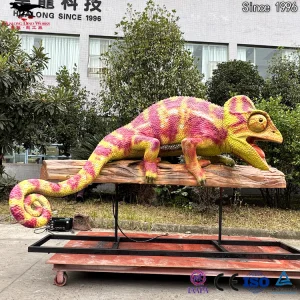
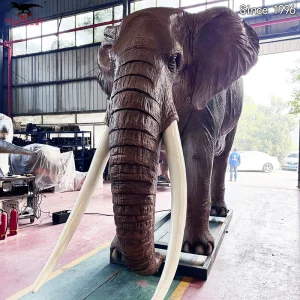
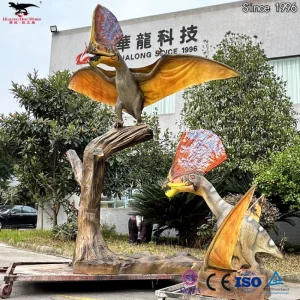
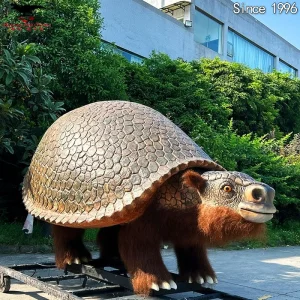
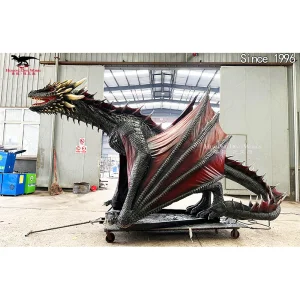
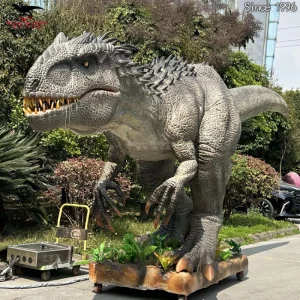
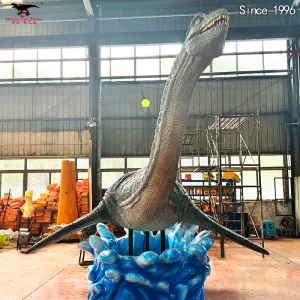
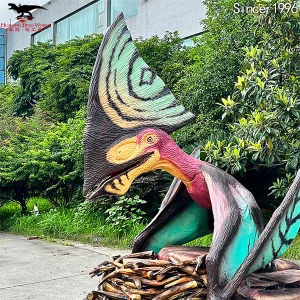
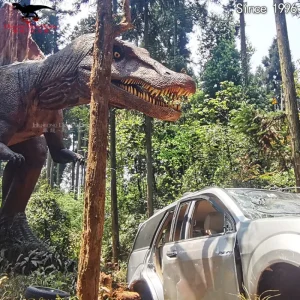
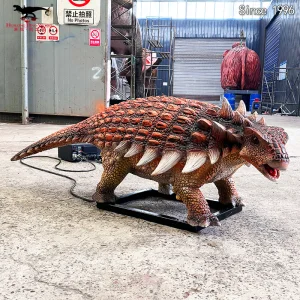
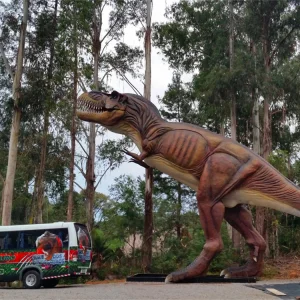
Large-frame predators, flighted pterosaurs, Ice Age megafauna, and high-impact kinetic exhibits built for premier attraction developments worldwide.
A rigorous due diligence framework for corporate project directors, theme park operators, and government tender authorities.
Procuring 40-foot containers of animatronic machinery across international borders introduces substantial contract liabilities if execution risks are left unaddressed. To ensure technical parity, bid compliance, and operational reliability, enterprise procurement teams should structure Requests for Proposal (RFPs) across four non-negotiable auditing tiers:
Tier 1: Mechanical Chassis & Structural Integrity Audit. Require mill-test certificates for all structural steel members. Skeletons must undergo FEA stress simulation to confirm wind load resistance (up to 120 km/h for large sauropod models exceeding 12 meters in outdoor exposures). Inspect joint hinge pivots: ensure self-lubricating bronze sleeve bearings or sealed ball bearings are specified rather than bare steel pins welded to structural plates.
Tier 2: Mechatronic Architecture and Power Conformance. Mandate copper-wound, high-torque brushless DC or planetary reduction gearmotors rated for continuous S1 duty cycles. Inquire about the control system interface: the controller must offer direct compatibility with standard theme park show control architectures (such as DMX512, Modbus, or PLC contact closures). Power supplies must hold CE, UL, or CSA marks configured to regional electrical standards (110V 60Hz or 220V 50Hz) with integrated circuit breakers and surge suppressors.
Tier 3: Polymer Resilience and Weatherproofing Verification. Request accelerated weatherometer test documentation confirming UV stability, ozone resistance, and thermal range performance (-20°C to +50°C minimum). The internal foam must maintain elasticity without crumb degradation under continuous flexural loads, and the exterior silicone membrane must be vulcanized with embedded elastic fabric webbing to prevent stress tearing at joints.
Tier 4: Factory Execution Capacity & Logistics Packing Plans. Inspect factory facilities via live video audit or third-party agencies (SGS, BV, or TÜV). Confirm whether large-scale models feature modular bolted flange disconnects designed to fit cleanly inside standard 40-foot High Cube (40HC) shipping containers without requiring risky on-site structural cutting.
Speak directly with our chief mechanical design engineers and export compliance specialists. We provide CAD engineering drawings, finite element stress models, electrical schematic layouts, and complete container load plans tailored to your attraction opening schedule.
Real-world insights directly addressing electrical requirements, climate tolerances, global logistics, and ongoing maintenance lifecycle protocols.
Standard lead time for a mixed 40HC container order (typically comprising 6 to 12 life-size specimens depending on dimensions) is 25 to 35 business days from CAD review and down payment confirmation. Highly complex multi-axis specimens or installations exceeding 20 meters generally run 40 to 50 days, supported by parallel production lines across our 50-acre facility.
Our environmental packages are engineered to local climate briefs. For arid desert installations (such as Saudi Arabia or UAE), we utilize UV-reflective silicone additives, triple-sealed bearing assemblies, and auxiliary internal exhaust fans. For sub-zero winter regions, we integrate internal thermostatic heating bands to prevent motor lubricants from congealing, maintaining full kinetic range in temperatures as low as -30°C.
All Hualong animatronic systems are built in strict compliance with ISO9001:2015 quality manufacturing processes, EU Machinery Directive 2006/42/EC, Low Voltage Directive 2014/35/EU, and Electromagnetic Compatibility Directive 2014/30/EU, carrying official CE, BV, TUV, and SGS testing laboratory certificates required for customs clearance and public operating permits.
Dinosaurs exceeding 8 meters in length are engineered with modular bolted steel flanges at the neck, tail, and limbs. Each segment disconnects cleanly to pack safely inside standard shipping containers (20GP, 40GP, 40HC, or flat-racks). Every connection point uses color-coded wiring quick-connect harnesses and matching alignment pins for straightforward field assembly.
Our gearboxes are lubricated with synthetic long-life grease that requires checking only every 12 to 18 months under daily commercial operation. Routine maintenance is limited to quarterly lubrication of open linkage ball joints, visual inspection of flexible joint skins, and air filtering of control box intakes. Every order includes a comprehensive maintenance manual and emergency repair kits (matching color pigments, spare silicone, adhesive mesh, and limit switches).
Yes. Beyond Mesozoic dinosaurs, our engineering team regularly produces Ice Age megafauna (mammoths, smilodons, glyptodons), mythological winged dragons, giant animated insects, and bespoke entertainment intellectual properties (IPs). Clients simply provide 2D concept drawings, scale sculpts, or 3D digital CAD files, and our design team converts them into functional kinematic skeletons.