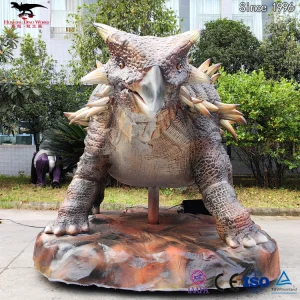
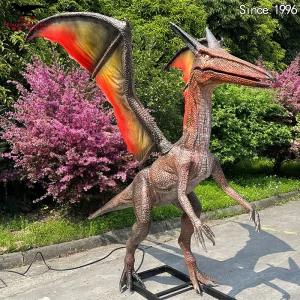
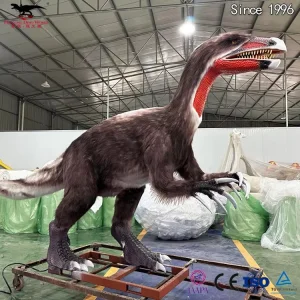
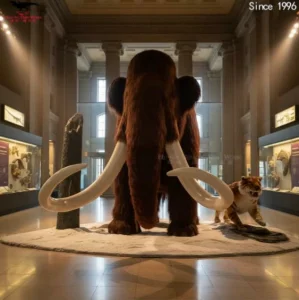
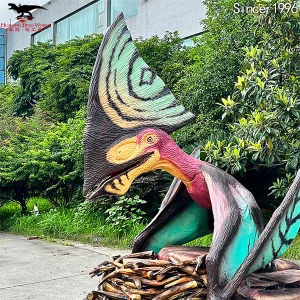
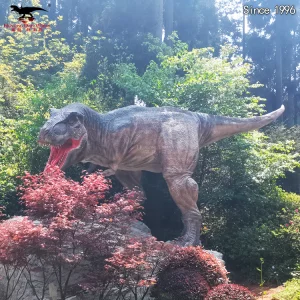
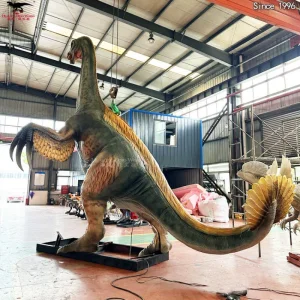
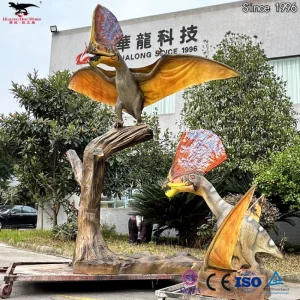
Precision Dynamic Replicas & Interactive Controller Units
Engineered for theme parks, natural history museums, experiential retail centers, and stadium spectacles with dual-microchip sync and heavy-duty motor drivers.
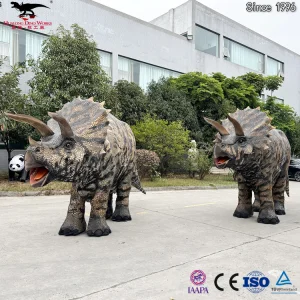
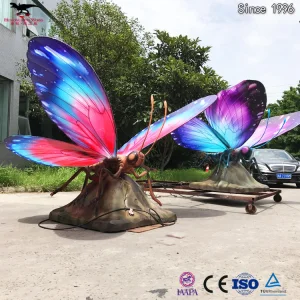
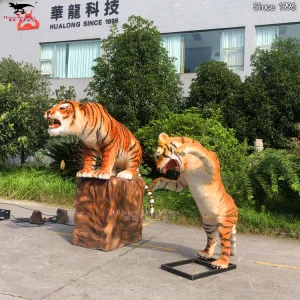
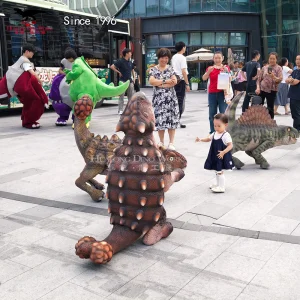
Evolutionary Paradigm of Dinosaur Model Controllers: From Mechanical Relays to AIoT Edge Intelligence
The animatronics industry has transitioned past traditional analog timers. Modern themed entertainment demands multi-channel microcontrollers with microsecond-level motor-audio synchronization and edge computing capabilities.
Generation 1: Mechanical Cam & Relay Logic
Early animatronic installations dating back to the late 20th century relied strictly on motorized cam shafts triggering microswitches and electro-mechanical contactors. These early systems lacked adaptability, suffered severe mechanical wear, required constant manual retiming, and posed high fire risks under uninterrupted commercial duty cycles.
Generation 2: Microcontroller & Dedicated PLC
The advent of 8-bit and 32-bit MCU boards (such as STMicroelectronics ARM Cortex-M architecture) alongside robust industrial Programmable Logic Controllers (PLCs) revolutionized dynamic control. Motion paths could now be scripted onto EEPROM or SD flash storage, enabling multi-track WAV playback synchronized with dual solid-state relays.
Generation 3: AIoT Neural Edge Controllers
Today’s high-tier installations utilize multi-bus controllers integrating CAN-bus, RS-485, Art-Net/DMX512, and integrated machine vision sensors. These edge modules dynamically adapt animatronic reactions based on guest proximity, visitor eye tracking, and environmental ambient conditions while uploading real-time telemetry to central SCADA systems.
Global Enterprise Procurement Requirements: Controller Architecture & Compliance
Purchasing dinosaur model controllers for municipal parks, commercial entertainment groups, and touring expos involves stringent safety thresholds, mean-time-between-failures (MTBF) criteria, and open communication protocols.
Electrical Safety & International Certifications
Global procurement teams cannot accept non-certified electronics. Controllers exported to North America must carry UL 508A industrial control panel compliance or CSA equivalents. European installations require stringent CE Directives (Low Voltage Directive 2014/35/EU and EMC Directive 2014/30/EU) alongside RoHS compliance. Flame-retardant ABS or powder-coated IP66 stainless-steel junction housings prevent catastrophic fire hazards.
- CE, UL 508A, FCC Class A, and RoHS compliance certificates verified per batch.
- Galvanic isolation on all I/O channels protecting microprocessors from back-EMF inductive spikes.
- Dual circuit emergency stop (E-Stop) loop compliance according to ISO 13849-1 Category 3 PL d.
Actuator Compatibility: Multi-Drive Hybrid Architectures
Animatronic figures utilize a mixed array of actuators: low-noise DC brushless servo motors for subtle cranial/facial expressions (pupil dilation, eyelid blink, nostrils), high-torque AC geared motors with variable frequency drives (VFD) for neck torsion and tail sweeps, and high-pressure pneumatic or hydraulic cylinders for rapid apex predator lunges.
- Seamless PWM and analog 0-10V/4-20mA signals for inverter speed modulations.
- High-current MOSFET drivers capable of handling inrush currents up to 45A during sudden mechanical reversals.
- Feedback loop processing supporting incremental magnetic encoders and absolute position potentiometers.
Interoperability & Master Show Control Integration
Stand-alone controllers that operate in silos cause significant technical friction. World-class attractions require units that bridge smoothly into existing park show control infrastructures, such as Alcorn McBride, Medialon, Beckhoff, or Q-SYS network backbones using SMPTE timecodes or UDP/IP messaging.
- DMX-512A and Art-Net v4 input for live theatrical show programming and lighting synchronization.
- Standardized RS-485 Modbus RTU communication for cascading daisy-chained multi-model installations.
- Ethernet/Wi-Fi configuration portal allowing over-the-air (OTA) choreography updates and diagnostic logs.
China Industry 4.0: Supply Chain Resilience & Zigong Cluster Ecosystem
Zigong manufactures over 85% of the world’s animatronic biological recreations. The convergence of high-precision electronic manufacturing and heavy mechanical fabrication creates an unmatched cost-to-performance ratio.
Automated SMT Assembly
Every motherboard is populated using automated high-speed surface-mount technology (SMT) pick-and-place lines, followed by automated optical inspection (AOI) to eliminate solder bridging, dry joints, and misalignments.
Thermal & Vibration Stress Testing
Controllers undergo a mandatory continuous 72-hour burn-in inside environmental stress chambers (-30°C to +70°C) alongside high-frequency shaker tables to simulate years of internal motor vibration and extreme desert/arctic park deployments.
Direct Ecosystem Cluster Advantage
From custom CNC machining of internal gearbox reducers to customized silicone vulcanization and controller PCB etching, the Zigong high-tech cluster provides rapid rapid-prototyping turnarounds of less than 10 business days for bespoke circuit runs.
Tier-1 Component Sourcing
Critical electronic components use genuine semiconductors from Infineon, Texas Instruments, Omron, and STMicroelectronics, guaranteeing an industry-leading Mean Time Between Failures (MTBF) exceeding 50,000 continuous operating hours.
Engineering Deployments Across Global Commercial Ecosystems
Operational conditions differ dramatically between an indoor educational museum and an open-air safari trail in Dubai or Scandinavia. Controllers are engineered with scenario-specific firmware configurations.
Extreme Climate Outdoor Theme Parks
For installations in regions like the Middle East (50°C ambient desert heat) or North American ski resorts (-25°C freeze), controllers are housed inside sealed IP67 fiberglass or double-walled aluminum cabinets. Integrated thermo-electric Peltier cooling plates and automatic de-icing heaters maintain internal board temperatures within safe operational thresholds.
Acoustically Sensitive Museums & Edutainment Centers
Natural history museums and science halls cannot tolerate high electromagnetic interference (EMI) or loud mechanical switching chatter. Our museum-grade controllers feature silent solid-state zero-crossing relays, brushless sinusoidal FOC motor drives, and balanced studio-grade XLR stereo outputs with SNR ratings above 102dB.
High-Cadence Touring Stage Spectacles & Live Shows
Touring theatrical productions (such as arena concerts, live touring circus performances, and pop-up activations) require lightning-fast plug-and-play setup. Controllers utilize heavy-duty Harting or Amphenol multipin quick-disconnect connectors, redundant backup processor failovers, and wireless handheld RF override remotes for stunt coordinators.
Standard Industrial Controller Hardware Configuration
Review the comprehensive electrical and operational parameters standard across our factory-direct controller product lines.
| Technical Parameter | Standard Commercial Series (MCU-800) | Heavy-Duty Industrial / Park Series (PLC-9200) | Flagship Interactive AI Series (NEURAL-X) |
|---|---|---|---|
| Primary Processing Core | Dual 32-bit ARM Cortex-M4 @ 168MHz | Industrial Siemens / Mitsubishi PLC Core | Quad-Core NPU Edge Compute Engine (4.0 TOPS) |
| Motion Axis Support | Up to 8 Independent Servo/AC Axes | Up to 24 Synchronized Servo/Hydraulic Axes | Up to 32 Dynamic Hybrid Real-Time Channels |
| Operating Input Voltage | 100–240V AC 50/60Hz Auto-Switching | 110V / 220V / 380V Three-Phase AC | 100–240V AC + Redundant 24V DC Secondary |
| Inrush Current Protection | Integrated MOV & Fast-Blow Fuse | Industrial Circuit Breakers & Thermal Relays | Intelligent Solid-State Current Limiting System |
| Trigger & Sensor Interfaces | Microwave Radar, Passive Infrared (PIR), Button | Photoelectric Beam, Floor Mat, Limit Switches | Computer Vision LiDAR, AI Facial/Gesture Tracking |
| Audio Amplification | 2x 50W High-Efficiency Class-D Integrated | 2x 100W Isolated Audio Pre-amp System | Surround 4.1 Channel Spatial True-Sound DAC |
| Enclosure Protection Class | IP54 Powder-Coated Metal Casing | IP66 Waterproof Sealed Steel Enclosure | IP67 Marine-Grade 316 Stainless Steel Housing |
| Operating Temperature | -10°C to +50°C | -25°C to +65°C | -40°C to +75°C (Active Thermoregulation) |
Frequently Asked Questions: Purchasing Dinosaur Model Controllers
Comprehensive technical and commercial clarifications directly addressing the operational concerns of engineering directors and supply chain managers.
How does an animatronic dinosaur controller maintain frame-accurate audio and motion synchronization?
Can our park technical crew reprogram movement patterns and sound effects independently on site?
What failsafe mechanisms protect the mechanical motors from burnout if an animatronic limb is obstructed?
Can your controllers withstand continuous outdoor exposure to monsoons, salt-fog, and desert dust?
What is the lead time for standard versus customized multi-channel controller orders?
High-Performance Animatronics & Specialty Dynamic Replicas
Complete lifecycle engineering featuring turn-key electrical integration, CE certifications, and heavy-duty mechanical reliability for international tourist destinations.