
Demand for immersive attractions is returning, and China has become a significant manufacturing base for global buyers. The 2023 TEA/AECOM Theme Index reported a strong recovery in major theme-park attendance worldwide. That recovery creates fresh demand for durable, interactive exhibits, including the Animatronic Dinosaur.
China’s domestic market offers useful context. According to China’s Ministry of Culture and Tourism, domestic tourist trips reached approximately 4.89 billion in 2023. Domestic tourism revenue exceeded RMB 4.9 trillion that year. These figures do not guarantee export quality. They do show a large testing environment for attraction equipment, themed environments, and visitor-focused experiences.
Reliable suppliers should demonstrate more than impressive photographs. Buyers need documented production experience, motion-system specifications, material details, and realistic delivery schedules. A factory tour can reveal welding quality, cable routing, paint finishing, and testing procedures. A dinosaur may look convincing under showroom lighting. It may behave differently after months outdoors.
This guide examines leading Chinese suppliers through practical purchasing criteria. These include design capability, mechanical reliability, weather resistance, customization, export support, and after-sales communication. International buyers should also review applicable safety requirements in their destination markets. Compliance is not a decorative certificate.
No supplier is perfect. Even experienced manufacturers can miss deadlines, underestimate installation challenges, or communicate poorly across languages. That is why independent verification remains important. Product videos, reference projects, inspection records, and clear contracts can reduce avoidable risk. The best choice is rarely the cheapest quotation. It is the supplier that can explain limitations honestly and support the exhibit after delivery.
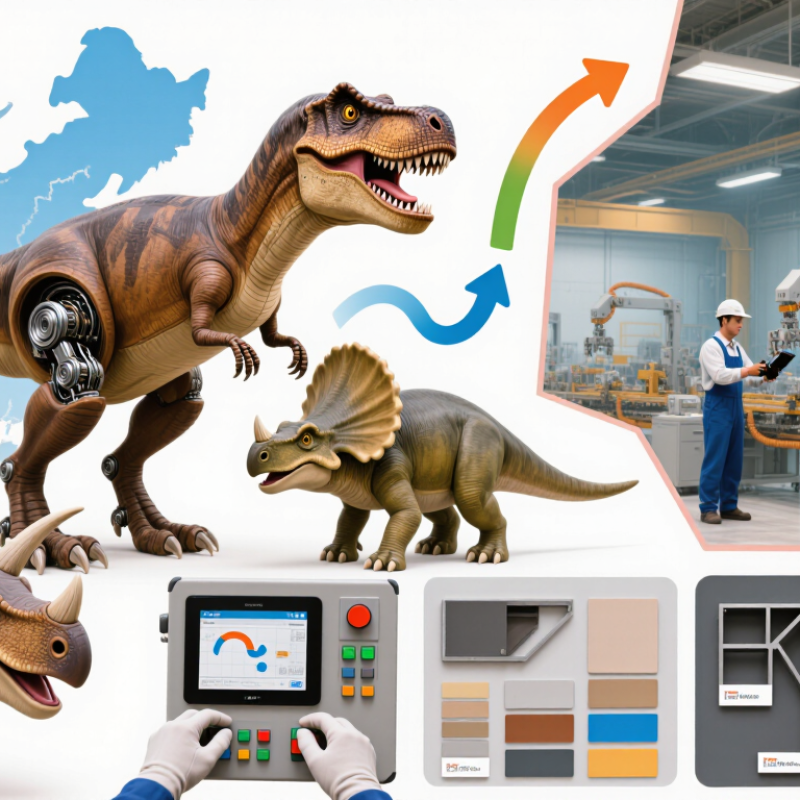
A leading Chinese animatronic dinosaur supplier is defined by more than a large showroom. Real experience appears in the details: balanced walking movement, natural jaw timing, sealed cable joints, and skin that survives repeated outdoor use. Experienced teams can explain why a 6-meter model needs stronger internal support and safer movement limits.
Technical knowledge matters at every stage. A reliable supplier should provide drawings, load information, motor specifications, and clear installation instructions. Factory testing should include motion cycles, sound checks, waterproof inspection, and emergency stop testing. Ask for dated videos and inspection records, not only polished photographs. Small details matter.
Communication reveals professional authority. Good suppliers confirm delivery conditions, voltage requirements, climate concerns, packaging methods, and local installation needs. They also explain what cannot be changed easily. That honesty is valuable. No supplier gets every detail right. Even experienced teams may underestimate site drainage, wind exposure, or visitor flow. Buyers should review these risks with engineers before production. Clear contracts, traceable materials, responsive after-sales support, and realistic timelines build reliability for museums, parks, exhibitions, and educational venues worldwide. Experience should be measurable, not merely promised.
Chinese animatronic dinosaur manufacturers offer product ranges for museums, theme parks, shopping centers, and educational attractions. Outdoor models often use galvanized steel frames, flexible silicone skins, and weather-resistant coatings. Indoor dinosaurs may feature lighter structures and quieter electric actuators. Popular types include walking dinosaurs, static display figures, baby dinosaurs, fossil replicas, and customized creatures for interactive exhibits. Full-size tyrannosaurs can exceed ten meters, while compact models fit inside retail spaces.
Manufacturers commonly combine servo motors, pneumatic cylinders, programmable controllers, and infrared sensors. These systems can coordinate head turns, jaw movement, tail motion, breathing effects, and recorded sounds. Some factories provide remote control panels, timed sequences, and modular parts for easier installation. Motion sensors can trigger a roar when visitors approach. Waterproof connectors and sealed control cabinets support outdoor use, but buyers should confirm the actual protection rating.
Details matter.
Experienced buyers request factory videos, movement cycle tests, wiring diagrams, and maintenance schedules before placing an order. A reliable supplier should explain replacement parts, installation steps, noise levels, and operating temperature limits. Custom painting and skin texturing can improve realism, although color samples may look different under strong sunlight. Not every impressive showroom model performs equally well after shipment. Seams may loosen, sensors may need adjustment, and complex systems require trained technicians. A careful inspection plan remains necessary.
China Top Animatronic Dinosaur Suppliers for Global Buyers
Comparing animatronic dinosaur suppliers requires more than checking photos and export prices. I have learned that a convincing display depends on movement, skin texture, sound design, and reliable internal mechanics. Ask each supplier for videos showing starting, stopping, turning, and repeated operation. Smooth movement matters. Request specifications for frame materials, motors, control systems, waterproofing, and power requirements. Clear answers often reveal practical experience.
Inspect the silicone or foam skin closely. Look for consistent coloring, realistic wrinkles, sealed joints, and reinforced stress points. Ask whether the dinosaur is tested under outdoor conditions, including rain, dust, and temperature changes. A supplier should provide production photos, inspection records, installation guidance, and a detailed warranty. Independent references can also help, but verify that the projects are genuine and comparable to yours.
Price comparisons can mislead buyers. A cheaper model may use weaker motors or thinner protective coatings. My own early mistake was trusting a polished showroom video without asking for long-duration testing. The video looked excellent. The maintenance plan was vague. That gap mattered later. Compare spare-part availability, response times, packaging methods, and technician support before signing an agreement. Require written drawings and acceptance standards. Some suppliers may resist detailed questions, yet careful questions protect the project. Quality is easier to compare when every supplier answers the same checklist.
How global buyers can compare suppliers and product quality through a normalized procurement scoring model.
The chart uses a 100-point evaluation framework. Higher weights indicate criteria that typically have a greater impact on long-term animatronic dinosaur value, reliability, and export readiness.
China’s leading animatronic dinosaur suppliers support buyers with more than factory production. Experienced export teams confirm dimensions, destination voltage, climate, and installation conditions before quoting. They can provide commercial invoices, packing lists, certificates of origin, user manuals, and test records for customs review. Wooden crates should follow applicable international packaging rules, including treatment requirements where required.
Customization begins with the visitor experience. Buyers may request a specific body size, movement pattern, sound level, skin texture, or lighting effect. A supplier should share drawings and a sample approval process before manufacturing. Outdoor projects need sealed connectors, protected control boxes, drainage planning, and materials suited to heat, rain, or dust. Small details matter. A loose cable can stop an entire display.
Safety requires documented checks, not attractive promises. Reliable suppliers use emergency stops, guarded moving joints, stable bases, and clear maintenance instructions. They should explain operating limits and provide spare parts support after delivery. International compliance depends on the destination, product configuration, and local inspection rules. Buyers should request relevant electrical, material, and machinery documentation early. No shipment is flawless. However, transparent testing and honest communication can expose weaknesses before loading, when corrections remain practical and affordable.
China Top Animatronic Dinosaur Suppliers for Global Buyers
Ordering, Shipping, Installation, and After-Sales Support from China
A reliable order begins with a detailed technical brief. Specify dinosaur length, movement range, skin material, power supply, climate, and display hours. Request videos of finished units, factory inspection records, wiring diagrams, and a spare-parts list. The World Bank’s Logistics Performance Index 2023 highlights customs, tracking, infrastructure, and delivery timeliness as key logistics factors. Ask suppliers to document each one. Small omissions become expensive later.
Shipping requires practical planning. Confirm crate dimensions, gross weight, loading photos, HS classification, insurance, and Incoterms before payment. UNCTAD’s Review of Maritime Transport 2023 states that over 80% of global merchandise trade moves by sea. Sea freight saves money, but port delays can disrupt an opening date. Build buffer time. A perfect schedule is unlikely. For large models, request factory acceptance testing before dispatch. Record every movement, sound effect, sensor response, and emergency stop.
Installation should include numbered cables, foundation drawings, and a clear commissioning checklist. An experienced supplier can provide remote video guidance, but local technicians may still be necessary. Train staff on daily inspections, water protection, lubrication, and safe shutdown procedures. After-sales support should define response times, remote diagnosis, replacement-part availability, and warranty limits. Keep critical sensors and control boards nearby. This sounds cautious. It is. Weather, voltage differences, and installation mistakes often create problems that the original quotation never shows.
| Project Type | Typical Product Scope | Typical Order Quantity | Production Lead Time | Ordering and Quality Control | Shipping and Installation | After-Sales Support | |||||
|---|---|---|---|---|---|---|---|---|---|---|---|
| Pre-Production Confirmation | Factory Inspection | Recommended Payment Structure | Common Shipping Method | Estimated Transit Time | Installation Requirement | Warranty Practice | Spare Parts and Remote Support | ||||
| Small Indoor Exhibition | 1–3 medium-sized moving dinosaurs, control system, sound module, and display accessories | 1–5 units | 25–40 days | Approved drawings, colors, movement list, voltage, and packing plan | Video inspection or third-party inspection before shipment | 30% deposit; balance after inspection and before shipment | Air freight or LCL sea freight | 7–35 days, depending on destination | Basic assembly by buyer; illustrated instructions and wiring labels recommended | Commonly 12 months for manufacturing defects | Basic replacement parts list, troubleshooting videos, and online technical assistance |
| Outdoor Park Display | Large weather-resistant dinosaurs, reinforced frames, control cabinets, speakers, and foundations | 5–20 units | 40–70 days | Site dimensions, foundation drawings, operating environment, safety requirements, and climate data | Factory inspection plus pre-shipment functional test | 30% deposit; 60% before shipment; 10% after agreed acceptance | Full-container or consolidated sea freight | 20–55 days port-to-port | Local civil works and professional assembly usually required; anchoring must follow engineering drawings | Usually 12 months; outdoor maintenance schedule should be agreed in writing | Recommended spare motors, sensors, controllers, cables, fasteners, and weatherproofing materials |
| Museum or Science Center | High-detail models, educational signage, interactive sensors, customized movements, and multilingual audio | 2–12 units | 50–90 days | Approved concept drawings, scientific references, content scripts, accessibility needs, and acceptance criteria | Design review, prototype approval, and final performance test | Milestone payments linked to design, production, inspection, and delivery | Crated sea freight; air freight for small urgent components | 20–60 days, excluding customs clearance | Professional installation, calibration, content testing, and staff training recommended | 12–24 months may be negotiated for customized institutional projects | Digital manuals, maintenance training, remote diagnostics, and documented service procedures |
| Theme Park or Large Attraction | Multiple dinosaur zones, oversized figures, synchronized effects, scenic structures, and visitor-control systems | 20–100+ units | 90–180 days | Detailed technical specification, site survey, risk assessment, interface schedule, and phased delivery plan | Factory acceptance test and site acceptance test | Milestone-based contract with retention or acceptance payment | Multiple full containers, project cargo, or special equipment when required | 25–70 days port-to-port; project schedules should include customs and inland delivery | Supplier-supervised installation with local engineers, lifting equipment, electrical work, and commissioning | Warranty, preventive maintenance, response time, and uptime targets should be contractually defined | Recommended local spare-parts stock, scheduled inspections, remote support, and optional service visits |
| Traveling Exhibition | Modular dinosaurs, collapsible scenic elements, reusable crates, portable controls, and quick-install accessories | 5–30 units | 35–75 days | Repeated-assembly requirements, maximum crate sizes, venue limitations, power standards, and transport sequence | Packing inspection, movement test, and crate-loading photos | 30% deposit; balance before dispatch or against agreed shipping documents | LCL, FCL, or air freight for time-sensitive touring schedules | 10–50 days, depending on route and service level | Modular installation designed for trained venue crews; repeated setup training is valuable | Warranty period should specify whether repeated transport and reassembly are covered | Portable spare-parts kit, packing checklist, video instructions, and rapid remote troubleshooting |
| Hotel, Resort, or Commercial Venue | Decorative or interactive dinosaurs, compact control systems, themed finishes, and guest-safe operating modes | 2–15 units | 35–65 days | Interior design approval, guest-flow plan, noise limits, fire-safety requirements, and electrical specifications | Appearance inspection, movement test, noise check, and packaging review | 30% deposit; balance after final inspection and before shipment | LCL or FCL sea freight; courier shipment for replacement parts | 15–55 days, route dependent | Indoor assembly is usually sufficient; local electrical compliance must be confirmed before operation | Typically 12 months, subject to operating hours and maintenance conditions | Routine maintenance schedule, cleaning guidance, spare consumables, and online service support |
Look for balanced walking, natural jaw timing, sealed cable joints, and durable outdoor skin. Experience should be measurable.
Request drawings, load information, motor details, power requirements, and installation instructions. Clear paperwork prevents expensive confusion.
Ask for dated videos and inspection records showing motion cycles, sound checks, waterproof testing, and emergency stops. Photos are not enough.
Reliable teams confirm voltage, climate, drainage, wind exposure, packaging, and visitor flow. They also explain difficult modifications honestly.
Give every supplier the same checklist. Compare movement, skin texture, motors, waterproofing, spare parts, warranties, and technician support.
Check consistent coloring, realistic wrinkles, sealed joints, and reinforced stress points. Scrutinize the small areas.
Cheaper models may use weaker motors or thinner protective coatings. I once trusted a polished video too quickly. The maintenance plan was vague.
Confirm body size, movement patterns, sound level, skin texture, lighting, drawings, and sample approvals. Never rely only on verbal promises.
Require emergency stops, guarded moving joints, stable bases, sealed connectors, protected control boxes, and clear operating limits. Safety needs records.
Ask for invoices, packing lists, origin certificates, manuals, test records, and relevant electrical or machinery documents. Local rules still require checking.
China has become an important sourcing destination for global buyers seeking reliable Animatronic Dinosaur products for museums, theme parks, educational venues, exhibitions, and commercial attractions. A leading supplier is defined by stable manufacturing capabilities, experienced design and engineering teams, consistent material quality, realistic movement and sound effects, and effective quality-control procedures. Chinese manufacturers may offer walking, roaring, swimming, or static dinosaur models, along with customized sizes, appearances, control systems, lighting, and interactive features. Buyers should compare suppliers by reviewing product specifications, production samples, testing procedures, project experience, and communication efficiency rather than focusing only on price.
A professional supplier should also provide export documentation, protective packaging, customization support, safety guidance, and compliance information suitable for the destination market. The ordering process commonly includes design confirmation, quotation, deposit, prototype or production approval, final inspection, and shipment by appropriate transport methods. Clear installation instructions, remote technical support, spare parts, maintenance advice, and responsive after-sales service can help ensure reliable long-term operation. Careful planning and direct communication allow international buyers to receive suitable products with predictable delivery, safe installation, and dependable project support.
